The Vertical Drama Revolution
Vertical drama has transformed short-form storytelling by forcing directors and actors to compress emotional arcs into sixty seconds or less. Unlike traditional horizontal cinema, vertical drama lives on mobile screens where attention spans are fleeting and thumb-scrolling is constant. Directors must therefore rethink every aspect of performance, from eye contact to gesture, because the frame is tall, narrow, and intimate. Actors cannot rely on wide shots or slow builds. Instead, they must deliver immediate, authentic reactions that register on a small display. This guide explores practical techniques for directing actors in this demanding format, covering casting, rehearsal, blocking, and on-set communication. The goal is to help you create powerful vertical dramas that feel complete despite their brevity.
Understanding the 60-Second Constraint
Sixty seconds is not just a time limit; it is a narrative shape. In vertical drama, every second must carry story weight. Directors should break the script into micro-beats: the hook, the conflict, the turn, and the resolution. Actors need to know exactly where their character starts and ends emotionally within that minute. Because there is no room for filler, each line and each pause must be justified. A common mistake is to treat the sixty seconds as a compressed traditional scene. Instead, think of it as a complete short story with a beginning, middle, and end. The director's job is to guide actors through these beats quickly while preserving emotional truth. Rehearsals should focus on transitions between beats, ensuring that changes in emotion feel earned rather than abrupt.
Casting for Vertical Drama
Casting for vertical drama requires a different eye than casting for film or television. You need actors who can project subtle emotions through their eyes and micro-expressions because the camera is often close. They must also be comfortable with rapid emotional shifts and able to take direction quickly. Look for performers who listen actively, because in a narrow frame, listening is as important as speaking. Chemistry between actors is crucial; vertical dramas often rely on romantic or intense interpersonal dynamics. During auditions, give sides that require a strong emotional turn within thirty seconds. Watch how the actor handles the turn without dialogue. Also, consider actors who can work with minimal props and settings. Their face and voice must carry the story. Finally, prioritize reliability and speed, as vertical productions often run on tight schedules with limited takes.
Key Traits to Look For
- Expressive eyes: Actors must convey emotion through gaze alone because close-ups dominate the vertical frame.
- Fast emotional recall: They need to switch from joy to anger to tears within seconds without losing authenticity.
- Physical economy: Small gestures read better than large ones; a slight head tilt can replace a sweeping arm movement.
- Collaborative spirit: They should welcome quick adjustments and trust the director's vision for the sixty-second arc.
- Vocal control: Whispering, shouting, and trembling voices must all be clear on a phone speaker without distortion.
Script Analysis and Beat Breakdown
Before rehearsals, the director must analyze the script for vertical drama and identify the essential beats. Because sixty seconds is short, every line must serve the story. Cut any dialogue that does not advance character or plot. Then break the remaining script into a beat sheet. A beat is a unit of emotional change. For example, a beat might be 'she realizes he lied' or 'he decides to confess.' Mark these beats on the script and share them with actors. Actors need to understand the emotional journey from beat to beat. In vertical drama, beats often happen faster than in traditional scenes. The director should also decide which beat is the climax and ensure the actor knows how to play it. This preparation saves time on set and helps actors deliver focused performances.
The First Five Seconds
The first five seconds of a vertical drama are critical. If the audience is not hooked, they will scroll away. Directors must work with actors to create an immediate emotional or visual hook. This might be a shocking line, a tearful face, or a tense confrontation. The actor must start at a high emotional pitch without it feeling forced. Rehearse the opening repeatedly until the actor can hit the hook naturally. Consider starting in the middle of action, not at the beginning. For example, instead of showing a couple meeting, start with them already arguing. The actor's first expression should convey the backstory instantly. Directors can use close-ups to amplify the hook. The actor's eyes should tell the audience what is at stake. Remember, the first five seconds set the tone for the entire sixty-second story.
Blocking for Vertical Frames
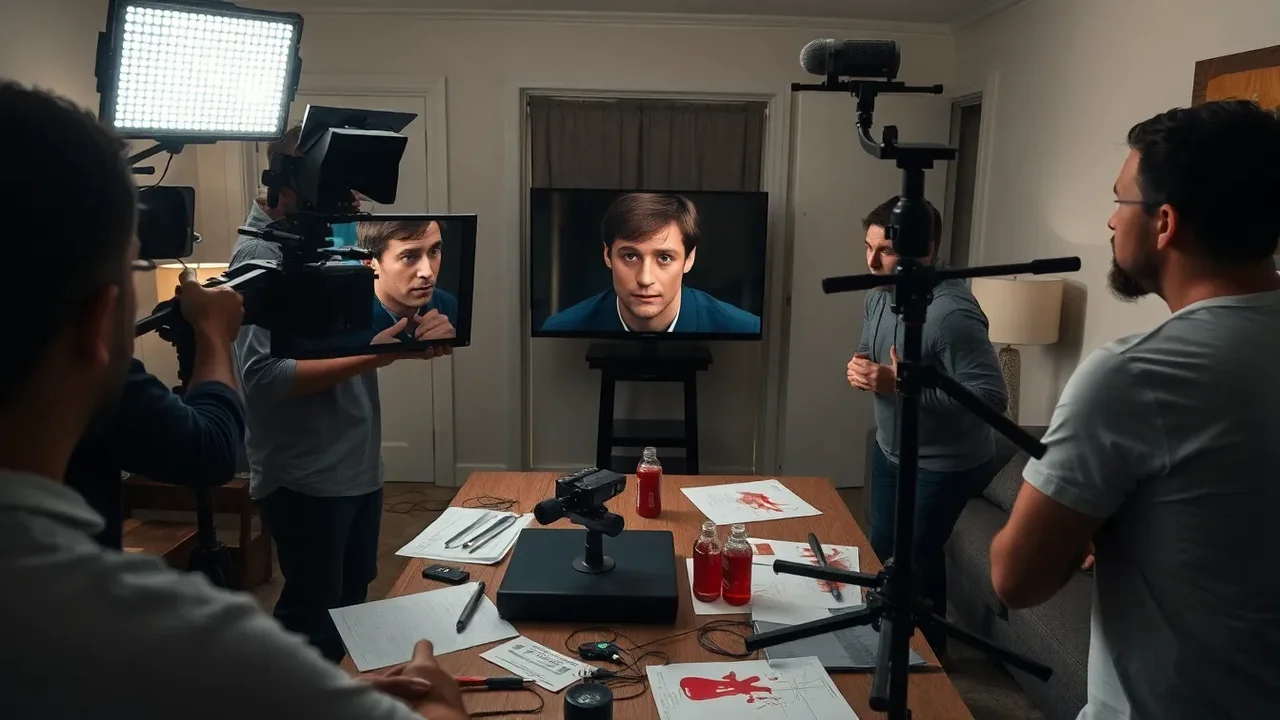
Blocking in vertical drama is not about moving actors across a wide stage. It is about positioning them within a tall, narrow rectangle. The frame is typically 9:16, so horizontal movement is limited. Directors should use vertical space: actors can stand, sit, kneel, or lie down to create visual variety. Proximity is powerful. When two actors are close, the frame feels intimate and tense. When one actor is in the foreground and another in the background, depth is created. Avoid placing actors side by side unless the story requires distance. Instead, stack them vertically or use over-the-shoulder angles. Because the frame is narrow, hands and props can easily block faces. Rehearse blocking with a phone camera to see exactly what the audience will see. Adjust actor positions so that eyes and mouths remain visible. Good blocking in vertical drama guides the viewer's eye without cutting away.
Directing Performance for Micro-Expressions
Micro-expressions are brief, involuntary facial movements that reveal true emotion. In vertical drama, where the face fills the screen, micro-expressions are your most powerful tool. Directors should train actors to become aware of their own micro-expressions without becoming self-conscious. One technique is to record close-up rehearsals and review them together. Ask the actor to think about a specific memory or feeling rather than indicating an emotion. For example, instead of saying 'look sad,' say 'remember the moment you lost something precious.' The actor's face will naturally produce micro-expressions. Directors can also use pacing: a slight pause before a reaction allows the micro-expression to surface. Avoid over-directing facial muscles. Trust the actor's instincts. In a sixty-second drama, a single raised eyebrow or quivering lip can carry more weight than a page of dialogue. Practice capturing these moments in single takes.
Working with Dialogue and Silence
Dialogue in vertical drama must be lean and purposeful. Every word should reveal character or advance plot. Directors should encourage actors to find the subtext behind each line. What is the character not saying? In a sixty-second story, silence can be as powerful as speech. A well-placed pause can create suspense or emotional weight. Rehearse scenes with and without dialogue to see what the face can convey alone. Sometimes cutting a line and replacing it with a look is more effective. Actors should also vary their vocal pace. Rapid delivery can convey panic or excitement, while slow delivery suggests sadness or contemplation. Because audio is often played through phone speakers, articulation is crucial. Directors should ask actors to project clearly without shouting. Avoid overlapping dialogue unless it serves chaos. Finally, use silence to punctuate the ending. A final silent reaction can leave a lasting impression.
Camera Proximity and Actor Intimacy
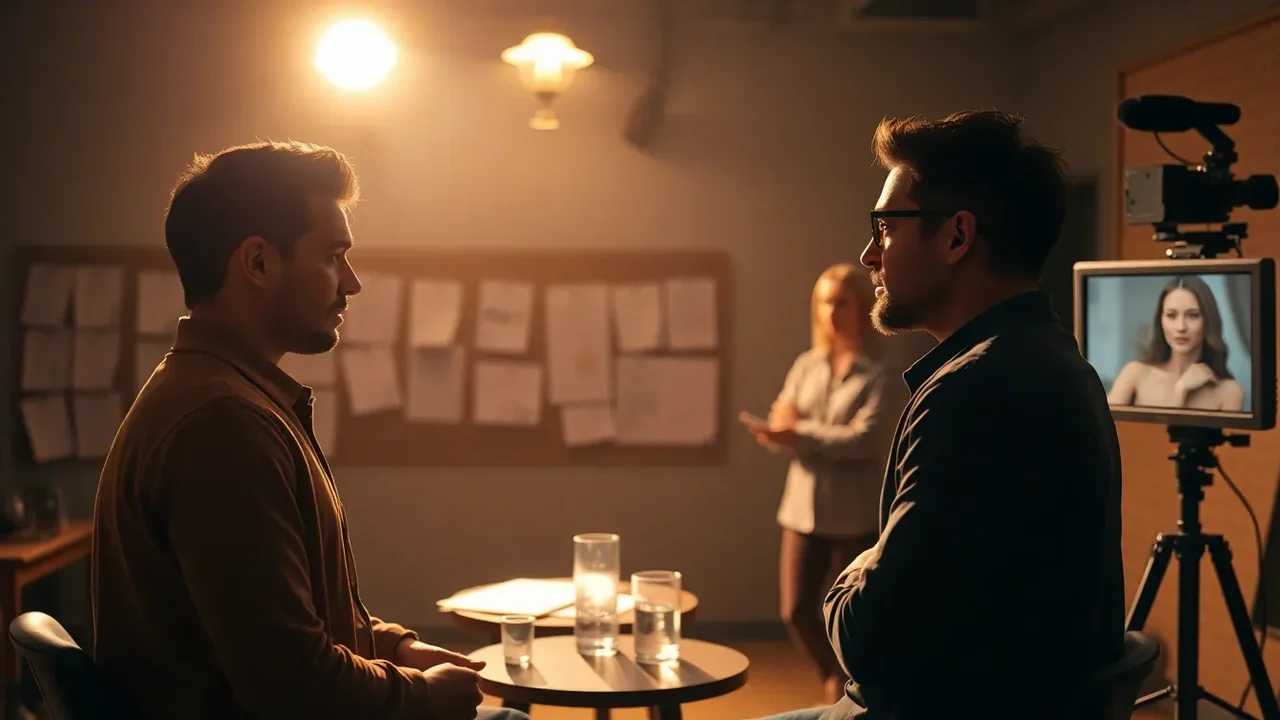
Vertical drama often uses extreme close-ups, which means the camera is physically close to the actor. This proximity can be intimidating. Directors must create a safe and trusting environment so actors can be vulnerable. Before shooting intimate scenes, discuss boundaries and comfort levels. Use a monitor so actors can see how they look, but do not let them become self-critical. When the camera is inches from a face, every tiny movement is magnified. Actors should avoid unnecessary blinking or swallowing. However, perfect stillness can feel unnatural. The director should guide actors to find a relaxed intensity. Eye line is critical: the actor must look at a specific point, often just off-camera, to create the illusion of conversation. For two-person scenes, use a narrow depth of field to isolate the speaker. Remember that intimacy on screen comes from the actor's willingness to be present, not from physical contact alone.
Rehearsal Techniques for Speed
Rehearsals for vertical drama must be efficient. You do not have the luxury of weeks of exploration. Start with a table read, but keep it brief. Focus on the emotional beats and the physical blocking. Then move to a phone camera rehearsal. Have actors perform the scene while you record on a smartphone. Play it back immediately and discuss what works. This immediate feedback loop is invaluable. Use a technique called 'speed-through': actors deliver lines as fast as possible without emotion, just to memorize the sequence. Then add emotion back in layers. Another technique is 'one-word direction': give each actor a single word to describe their character's objective for the scene, such as 'revenge' or 'longing.' This keeps performances focused. Finally, rehearse the ending first. Because the ending is the payoff, actors need to know exactly where they are going. Then work backwards to the beginning.
On-Set Communication
On a vertical drama set, communication must be clear, concise, and fast. Actors are often nervous because of the tight schedule. The director should set a calm, focused tone. Use specific, actionable language. Instead of saying 'be more emotional,' say 'let your voice crack on the third line.' Instead of 'move a little left,' say 'shift six inches toward the window.' Give adjustments one at a time. Do not overload actors with multiple notes. Use positive reinforcement when they nail a beat. If an actor is struggling, take a moment to ask what they need. Sometimes a simple question like 'what is your character feeling right now?' unlocks the performance. Keep the crew quiet during takes. In vertical drama, audio quality matters, so avoid unnecessary noise. Finally, remember that actors are your collaborators, not just tools. Respect their process and they will deliver better work.
Managing Energy and Pacing
Energy management is crucial in sixty-second drama. The actor must sustain a high level of intensity for the entire take, but not burn out. Directors should help actors modulate their energy. The beginning might be a 6 out of 10, rising to a 10 at the climax, then dropping to a 4 for the resolution. If an actor starts at 10, there is nowhere to go. Rehearse the energy curve explicitly. You can even draw a graph on paper. Pacing is also about rhythm. Short scenes need varied tempo. A rapid exchange of dialogue can create excitement, while a slow, deliberate line can create dread. Use pauses strategically. A one-second pause on screen feels like an eternity. Directors should count beats out loud during rehearsal to help actors internalize timing. On set, use a stopwatch to ensure the scene fits the sixty-second limit. If it runs long, cut dialogue, not emotion. The actor's internal rhythm must match the edit's external rhythm.
Common Mistakes and Solutions
Directors new to vertical drama often make predictable mistakes. One is over-blocking: moving actors too much in a tiny frame. Solution: simplify movement and let faces do the work. Another mistake is allowing actors to play to the back row. In vertical drama, the audience is inches away, so subtlety is key. Solution: remind actors to perform for the lens, not the room. A third mistake is ignoring the vertical composition. Directors may frame actors as if for horizontal cinema, leaving empty space at top and bottom. Solution: use the full height, placing eyes in the upper third. A fourth mistake is rushing the emotional beats. Because time is short, directors may skip necessary transitions. Solution: rehearse the beats until they flow naturally. Finally, many directors forget to check audio. Solution: use a lavalier mic or boom pole, and always record room tone. These solutions can save a sixty-second drama from feeling amateurish.
Comparison of Horizontal vs. Vertical Directing
| Aspect | Horizontal Drama | Vertical Drama | Director's Focus |
|---|---|---|---|
| Frame | Wide, 16:9 | Tall, 9:16 | Use vertical space and close-ups |
| Pacing | Slow builds allowed | Immediate hook required | Hit emotional beats fast |
| Blocking | Actors move across stage | Actors stack vertically | Keep faces visible |
| Performance | Project to back row | Subtle micro-expressions | Direct for the lens |
| Audio | Room ambience okay | Clear phone speaker audio | Use lav mics and articulate |
Post-Production Considerations for Actors
Even though actors finish their work on set, post-production affects how their performance is received. Directors should inform actors about the edit, especially if the sixty-second drama will be cut down further for different platforms. Actors may need to record additional dialogue or ADR if audio was unclear. Directors should also consider color grading, which can change skin tones and mood. A warm grade can make a romantic scene feel tender, while a cool grade can make a thriller feel cold. Actors should be aware that their micro-expressions might be enhanced or softened in post. Finally, music and sound effects can completely change the emotional impact of a performance. A silent tear can become devastating with a single piano note. Directors should collaborate with actors during post when possible, but respect their time. A quick text update about the final cut can maintain a good working relationship.
Case Study: A 60-Second Romance
Imagine a vertical drama about a couple breaking up in a café. The sixty seconds begin with the woman sliding a ring across the table. The man catches it. Beat one: shock. Beat two: denial. Beat three: anger. Beat four: sadness. Beat five: acceptance. The director blocks the scene with the woman on the left, man on the right, but the camera is positioned so their faces fill the frame. The woman's micro-expression shifts from hope to resignation. The man's jaw tightens. There is no dialogue for the first ten seconds. Then the woman whispers, 'I'm sorry.' The man replies, 'Don't be.' The final five seconds are a silent close-up of the ring on the table. The director rehearsed the energy curve: start at 4, rise to 8, drop to 2. The actors performed in three takes. The edit used the second take because the man's tear arrived naturally. This case study shows how a complete emotional arc can fit in one minute.
Practical Exercises for Directors
To improve your skills, practice these exercises regularly. First, the 'one-minute scene' exercise: take a classic scene and compress it to sixty seconds. Direct two actors and record on a phone. Review the footage and identify where the emotional beats were unclear. Second, the 'silent take' exercise: direct a scene with no dialogue. Force actors to communicate only through face and body. This builds micro-expression skills. Third, the 'energy graph' exercise: draw an energy curve for a scene and ask actors to match it. Fourth, the 'camera proximity' exercise: shoot the same scene at three distances—wide, medium, and extreme close-up. See how performance changes. Fifth, the 'speed rehearsal' exercise: rehearse at double speed, then at half speed. This helps actors find the right tempo. Finally, the 'single-word direction' exercise: give each actor one word to define their objective. These exercises build the muscle memory needed for fast, effective vertical drama directing.
Final Tips for Success
As you embark on your vertical drama projects, keep these final tips in mind. Always prioritize story over spectacle. A simple, honest performance in a close-up will beat a complex action sequence every time. Trust your actors. They are your partners in creating the emotional truth. Give them clear, specific directions, but allow them room to discover. Rehearse with a phone camera, because what looks good to the naked eye may not translate to the vertical frame. Keep the sixty-second limit sacred. If you go over, cut dialogue, not emotion. Pay attention to audio quality. Bad sound ruins good performances. Finally, remember that vertical drama is still drama. The same principles of character, conflict, and change apply. The only difference is the canvas. Master the vertical canvas, and you will create stories that resonate deeply in just one minute.
Advanced Techniques for Emotional Precision
For directors seeking to elevate their work, emotional precision is the goal. One advanced technique is 'emotional substitution.' Ask the actor to replace the scripted emotion with a personal memory that evokes a similar feeling. For example, if the character is grieving a lost parent, the actor might recall a lost pet. The face will produce authentic micro-expressions. Another technique is 'physical anchoring.' Have the actor hold a small object that represents their character's desire. This can be a ring, a key, or a piece of paper. The object gives the actor something to focus on and can trigger real emotion. A third technique is 'tempo variation.' Direct the actor to deliver the same line at three different speeds: fast, medium, and slow. Then choose the one that fits the beat. Finally, use 'the pause before.' Ask the actor to hold a beat before responding to a line. This creates tension and allows the audience to anticipate the reaction. These techniques require trust and rehearsal, but they yield powerful results in sixty seconds.
Working with Non-Professional Actors
Many vertical dramas feature non-professional actors, often found through social media or street casting. Directing them requires patience and clarity. First, avoid technical jargon. Instead of 'hit your mark,' say 'stand on the tape.' Instead of 'project,' say 'speak as if I am across the room.' Second, give them simple objectives. One word is often enough: 'flirt,' 'apologize,' 'threaten.' Third, use repetition. Have them perform the same action five times in a row. By the third or fourth take, they often forget the camera and become natural. Fourth, use their own words. If a line feels stiff, ask them to say it in their own way. You can always adjust in post. Fifth, create a relaxed atmosphere. Non-professionals can sense tension. Laugh, be encouraging, and never criticize in front of others. Finally, capture many takes. Non-professionals may deliver a perfect micro-expression only once. Keep rolling. Trust it.
FAQ - Directing Actors for Vertical Drama in 60 Seconds
What is the biggest challenge when directing actors for vertical drama in 60 seconds?
The biggest challenge is compressing a complete emotional arc into one minute while keeping performances authentic for a close-up vertical frame. Directors must prioritize micro-expressions and fast pacing.
How do I get actors to deliver quick emotional shifts?
Use specific, actionable directions and rehearsal techniques like emotional substitution, tempo variation, and one-word objectives. Rehearse the energy curve and rehearse the ending first.
Should I use professional actors for vertical drama?
Both professional and non-professional actors can work. Professionals bring speed and subtlety, while non-professionals can offer raw authenticity. The key is clear communication and a safe, relaxed set.
How important is audio in 60-second vertical drama?
Audio is critical. Viewers often watch on phone speakers, so dialogue must be clear and articulate. Use lavalier mics, record room tone, and avoid overlapping dialogue unless intentional.
What is the best way to block actors in a vertical frame?
Use vertical space by stacking actors, keep faces visible, and avoid side-by-side placements. Rehearse with a phone camera to see exactly what the audience will see. Simplify movement.
Can I direct a vertical drama without a large budget?
Yes. Vertical drama is ideal for low-budget productions. Focus on strong scripts, close-up performances, natural lighting, and smartphone cameras. Rehearse efficiently and capture many takes.
Directing actors for vertical drama in 60 seconds requires compressing emotional arcs into micro-beats, prioritizing micro-expressions, vertical blocking, and fast pacing. Use close-ups, clear audio, and specific directions. Rehearse with a phone camera, rehearse the ending first, and trust actors to deliver authentic performances within the tight timeframe.
Directing actors for vertical drama in 60 seconds is a unique craft that demands speed, precision, and emotional honesty. By mastering micro-expressions, vertical blocking, and rapid beat breakdown, directors can guide performers to deliver powerful stories within a single minute. Remember that the frame is intimate, the audience is close, and every second counts. With practice and the right techniques, you can create vertical dramas that resonate long after the scroll stops.