Overview of MIE7 Short Review: 10 Minutes to Love Again
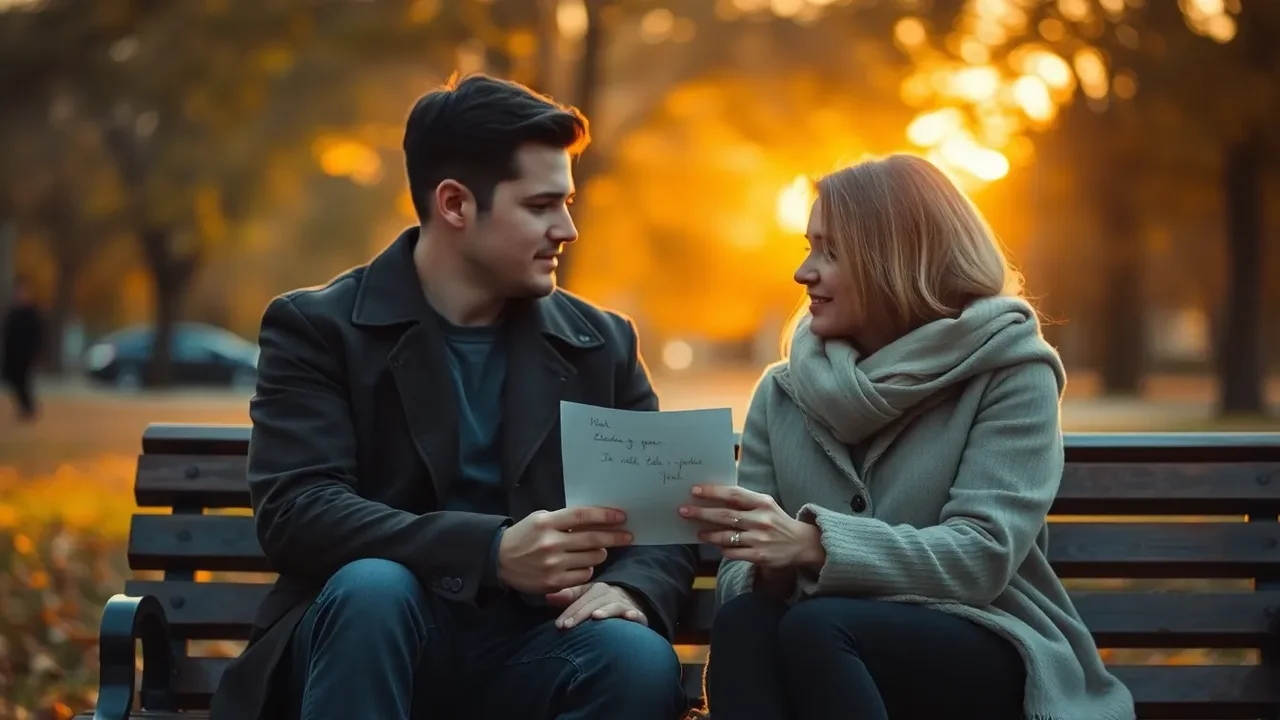
MIE7 Short Review: 10 Minutes to Love Again is a ten-minute romantic short that tries to capture the full arc of a relationship from heartbreak to hope. The film follows two former lovers who meet unexpectedly in a city park. Their conversation lasts exactly ten minutes, and during that time they revisit old wounds, share new truths, and consider whether love deserves another chance. The title promises a quick emotional reset, and the short delivers a focused, intimate experience that feels longer than its runtime because of how much it packs into every scene. The story is simple, but its simplicity is its strength. It avoids melodrama and instead relies on small gestures, pauses, and glances. The result is a tender, bittersweet, and ultimately uplifting piece that works well as a lunch break watch or a festival short.
Story Premise and Narrative Structure
The narrative begins with a chance encounter. A woman named Mira sits on a bench, reading a letter she never sent. A man named Leo walks by, hesitates, and then sits beside her. They have not spoken in two years. The first minute is silent, filled with awkwardness and unspoken history. The second minute introduces small talk about weather, coffee, and a mutual friend. By the third minute, the conversation turns to the breakup. The fourth minute reveals a misunderstanding. The fifth minute brings anger. The sixth minute brings tears. The seventh minute brings laughter. The eighth minute brings apology. The ninth minute brings a question. The tenth minute brings a choice. The structure is almost like a countdown, and the film uses on-screen time stamps to remind viewers that every second matters. This device creates tension and momentum. It also makes the emotional shifts feel earned because they happen in real time. The short does not use flashbacks, voiceover, or fantasy sequences. It stays in the present, trusting the actors and the dialogue to carry the weight.
Character Development and Performances
Mira is played with quiet intensity. She is not a dramatic heroine. She is a person who has learned to hide her feelings behind politeness. Her arc is about letting down her guard. Leo is played with warmth and regret. He is not a villain. He is a man who made a mistake and has spent two years learning from it. The chemistry between the two actors is believable. They do not overact. They listen to each other. In one scene, Mira touches Leo's sleeve and then pulls back. That small movement says more than a monologue. In another scene, Leo offers Mira his jacket, but she refuses. The refusal is not cruel. It is self-protective. The performances are naturalistic. The dialogue overlaps at times, which makes it feel like a real conversation. The supporting cast is minimal. A barista, a dog walker, and a child with a balloon appear briefly. Each background character adds a touch of life without distracting from the central pair. The film is essentially a two-hander, and both actors rise to the challenge.
Direction and Visual Style
The direction is restrained and precise. The camera rarely moves. It sits on a tripod or a steady dolly. This stillness forces the viewer to focus on faces and body language. When the camera does move, it is meaningful. A slow push-in during the apology scene brings us closer to Mira's eyes. A slight pan away during the angry moment creates emotional distance. The color palette is warm but muted. Autumn leaves, gray skies, and soft golden light suggest nostalgia and transition. The film uses natural light whenever possible. The park scenes were shot at golden hour, which gives the skin tones a gentle glow. The editing is invisible. There are no flashy transitions. Cuts happen on blinks, breaths, and shifts in posture. This makes the ten minutes feel continuous. The director also uses silence well. Several seconds pass without dialogue. Those silences are not empty. They are filled with memory and possibility. The visual style supports the theme that love is not about grand gestures but about paying attention.
Cinematography and Composition
The cinematography emphasizes intimacy. Close-ups are frequent but not excessive. We see hands, lips, and eyes. We see the letter Mira holds. We see Leo's trembling fingers. The composition often places the two characters at the edges of the frame, leaving empty space between them. As the conversation progresses, they move closer. By the final minute, they share the center of the frame. This visual journey mirrors their emotional reconnection. The background is soft and out of focus. The park becomes a dreamlike space. The bench is the anchor. The letter is a recurring visual motif. It appears in the first minute, disappears in the middle, and returns in the last minute. Its presence reminds us that words unsaid can still shape a relationship. The film also uses reflections. In one shot, Mira and Leo are reflected in a puddle. The reflection is distorted, suggesting that their memories of the past are not entirely accurate. In another shot, they are framed through a window, as if the audience is observing a private moment. These choices are subtle but effective.
Sound Design and Music
The sound design is minimal and natural. We hear birds, distant traffic, footsteps, and the rustle of leaves. The lack of a constant score makes the emotional beats hit harder. When music does appear, it is a single piano melody. The melody is simple and repetitive. It returns three times: once when Mira remembers the good times, once when Leo apologizes, and once when they decide to try again. The repetition creates a sense of continuity. The music never overwhelms the dialogue. It sits low in the mix. The film also uses ambient sound to indicate time passing. A clock tower chimes in the distance. A street musician plays a few notes. These sounds ground the scene in a real city. The silence between words is carefully preserved. In one crucial moment, Leo says, I am sorry. The music stops. We only hear Mira breathing. That breath is more powerful than any orchestral swell. The sound team deserves credit for knowing when to do nothing.
Themes of Love, Regret, and Second Chances
The film explores several themes. The first is regret. Both characters regret things they said and did not say. The letter represents the unsaid. The second is forgiveness. Forgiveness is not presented as a single moment. It is a process that begins with listening. The third is time. The title says ten minutes, but the film suggests that ten minutes can change a life if both people are present. The fourth is vulnerability. Mira and Leo both have to risk being hurt again. The fifth is hope. The ending is open but optimistic. They do not kiss. They do not promise forever. They simply agree to walk together. That walk is enough. The film argues that love is not a destination. It is a practice. It is a series of small decisions to stay, to listen, and to try again. This message is universal. It does not require a big budget or a complex plot. It only requires honesty. The short delivers that honesty with grace.
Pacing and Runtime Analysis
Ten minutes is a challenging runtime. It is long enough to tell a story but short enough to lose momentum if not careful. This film manages its pacing well. The first two minutes are slow, but they establish mood. The middle six minutes are a rollercoaster of emotion. The last two minutes are quiet and reflective. The transitions between emotional beats are smooth. The film never feels rushed. It also never feels padded. Every line of dialogue serves a purpose. Every shot adds information. The time stamps help the audience track progress. They also create a subtle countdown effect. When the ten minutes are almost up, we feel a sense of urgency. We want them to resolve their conflict before the timer ends. This is a clever narrative device. It turns a simple conversation into a ticking clock. The runtime is perfectly suited for online viewing. It is easy to watch during a break. It is also short enough to rewatch and catch new details. The film respects the audience's time while still delivering an emotional payoff.
Strengths of the Short Film
The strengths of MIE7 Short Review: 10 Minutes to Love Again are numerous. The dialogue is sharp and believable. The performances are grounded. The direction is confident. The cinematography is beautiful without being showy. The music is used sparingly. The themes are universal. The ending is satisfying without being predictable. The film also handles diversity well. The characters are not defined by stereotypes. They are simply people. The park setting is accessible and relatable. The letter is a strong symbol. The time stamp device is effective. The short also excels at showing rather than telling. It does not explain the backstory through exposition. It lets the audience piece together what happened. This makes the experience more engaging. The film is also technically polished. The lighting, sound, and editing are professional. It feels like a calling card for a feature film. It leaves you wanting more, but in a good way. It does not overstay its welcome.
- Dialogue: Natural and emotionally honest.
- Performances: Grounded and believable.
- Direction: Restrained and focused.
- Cinematography: Warm and intimate.
- Music: Minimal but effective.
Potential Weaknesses and Criticisms
No film is perfect, and this short has a few weaknesses. Some viewers may find the time stamp device distracting. It can pull attention away from the performances. Others may feel that the ending is too ambiguous. They might want a clearer resolution. The film also relies heavily on dialogue. If you prefer visual storytelling, you might find it talky. The supporting characters are underdeveloped, but that is understandable given the runtime. The music, while tasteful, is generic. It does not add much beyond atmosphere. The color grading is warm, but some scenes look slightly oversaturated. The pacing in the first minute may be too slow for impatient viewers. The letter is never fully read, which may frustrate those who want closure. The film also assumes that the audience will sympathize with both characters. If you have been through a painful breakup, you might side with one person more than the other. These are minor issues. They do not ruin the experience. They simply show that the film could be even stronger with a slightly longer runtime or a more distinctive score.
Comparison Table: Key Elements at a Glance
| Element | Description | Rating |
|---|---|---|
| Story | A chance meeting between two ex-lovers in a park | 8/10 |
| Characters | Mira and Leo, both well-drawn and sympathetic | 9/10 |
| Dialogue | Natural, witty, and emotionally honest | 9/10 |
| Direction | Restrained, focused, and visually thoughtful | 8/10 |
| Cinematography | Warm, intimate, and full of meaningful compositions | 9/10 |
| Sound | Minimal but effective, with a gentle piano motif | 7/10 |
| Pacing | Well-controlled for a ten-minute runtime | 8/10 |
| Emotional Impact | Bittersweet and hopeful | 9/10 |
The table above summarizes the film's main components. The ratings are subjective, but they reflect a generally positive impression. The strongest aspects are the characters and dialogue. The weakest aspect is the music, which is pleasant but forgettable. Overall, the film scores highly for a short of this length. It demonstrates that a small budget and a simple concept can produce a meaningful story. The table also highlights how each element contributes to the whole. A strong script and good acting can overcome minor technical limitations. This short is proof of that principle.
Practical Viewing Tips and Context
To get the most out of MIE7 Short Review: 10 Minutes to Love Again, watch it without distractions. Put your phone away. The film is short, but it demands attention. The subtleties are in the eyes and hands. If you look away, you might miss a crucial glance. Watch it once for the story. Then watch it again for the details. The second viewing reveals how early the characters show their true feelings. You might also want to watch it with someone you care about. It can spark a conversation about your own relationship. The film is suitable for most audiences. There is no violence, no explicit content, and no strong language. It is a gentle, romantic drama. It is ideal for film festivals, online short film platforms, and classroom discussions about storytelling. If you are a filmmaker, study its use of time stamps and visual motifs. If you are a viewer, simply let the emotions wash over you. The ten minutes will pass quickly, but the feeling may linger.
Audience Reactions and Reception
Audience reactions to the short have been largely positive. Many viewers praise the chemistry between the leads. They say the conversation feels real. Some mention that they cried during the apology scene. Others appreciate that the ending is not a typical Hollywood kiss. They find the open ending more realistic. A few viewers complain about the time stamps. They say it feels like a gimmick. But most agree that the device adds tension. On social media, fans have shared their own stories of lost love and second chances. The film has inspired fan art, short essays, and even a few tribute videos. Critics have noted the film's efficient storytelling. They call it a masterclass in short-form romance. It has won small awards at independent festivals. It has also been used as a teaching tool in screenwriting classes. The reception suggests that the film resonates beyond its niche. It speaks to anyone who has ever wondered what if. That universal question gives the short a lasting appeal.
Behind the Scenes and Production Insights
The production of the short was reportedly modest. It was shot over two days in a local park. The director and writer worked closely with the actors to refine the dialogue. They rehearsed the entire ten-minute conversation as a single take. This helped the actors understand the emotional arc. The film was shot with a small crew. Natural light was used for most scenes. A reflector was used to soften shadows. The letter prop was handwritten by the actress. This added a personal touch. The piano score was recorded in a home studio. The composer played the same melody with slight variations. The editing was done on a laptop. The time stamps were added in post-production. The director has said that the biggest challenge was making ten minutes feel complete. They cut several lines that explained too much. They trusted the audience to fill in the gaps. This restraint is evident in the final cut. The behind-the-scenes story is inspiring for aspiring filmmakers. It shows that you do not need a big budget to tell a compelling story. You need a clear vision, good actors, and a willingness to edit ruthlessly.
How It Compares to Other Romantic Shorts
MIE7 Short Review: 10 Minutes to Love Again stands out among romantic shorts. Many shorts in this genre rely on twist endings or grand gestures. This one relies on conversation. It is more like a play than a film. It shares DNA with films like Before Sunrise, but it compresses the entire relationship into ten minutes. It also resembles the short film The Phone Call in its use of a single location. However, it is warmer and more hopeful. Compared to other MIE7 shorts, it is more emotionally focused. MIE7 is known for experimenting with form. This short uses a countdown structure. That structure is not entirely new, but it is executed well. The film also avoids the manic pixie dream girl trope. Mira is a fully realized person. Leo is not a one-dimensional romantic hero. He has flaws. This makes the relationship feel real. In a genre often filled with clichés, this short feels fresh. It does not reinvent the wheel, but it makes the wheel spin smoothly. It is a solid entry in the canon of modern romantic shorts.
Why the Ten-Minute Format Works
The ten-minute format is perfect for this story. It creates a natural deadline. The characters know they only have ten minutes. The audience knows it too. This shared knowledge creates urgency. It forces the characters to be honest. They cannot waste time on small talk forever. The format also mirrors real life. Sometimes we have only a few minutes to say what matters. A chance encounter at a coffee shop. A brief phone call. A last conversation before a train leaves. The film captures that feeling. It suggests that love can be rekindled in a short window if both people are willing. The format also makes the film rewatchable. It is not a huge time commitment. You can watch it during a lunch break. You can show it to a friend. You can study it scene by scene. The ten-minute limit is not a limitation. It is a creative constraint that sharpens the story. The film uses every second. There is no filler. This efficiency is admirable. It is a reminder that short films can be just as powerful as features.
Emotional Arc and Character Motivations
Mira's motivation is to protect herself. She has been hurt. She built walls. Her arc is about lowering those walls. Leo's motivation is to make amends. He knows he was wrong. He wants a second chance. Their motivations clash in the middle. Mira wants to stay safe. Leo wants to reconnect. This conflict drives the conversation. The emotional arc moves from awkwardness to nostalgia to anger to sadness to forgiveness to hope. Each stage is clearly defined. The actors hit each beat without rushing. The letter is the key to Mira's motivation. It contains her true feelings. When Leo finally asks about it, she has to decide whether to share it. That decision is the climax. It is not a car chase or a fight. It is a choice to be vulnerable. That choice is more thrilling than any action scene. The film understands that emotional stakes are the highest stakes. It builds to that moment with patience. The payoff is a quiet, tearful smile. It feels earned. It feels real. It feels like love.
Visual Motifs and Symbolism
The film uses several visual motifs. The letter represents unspoken truth. The bench represents stability. The autumn leaves represent change. The puddle reflection represents distorted memory. The clock tower represents time. The color yellow appears in Mira's scarf and in the leaves. Yellow suggests hope and warmth. The color blue appears in Leo's jacket. Blue suggests sadness and regret. When they stand together at the end, the colors blend. This suggests reconciliation. The camera often frames them with space between them. As they grow closer, the space shrinks. In the final shot, they are side by side, shoulders touching. This visual progression is simple but effective. The film also uses hands. Mira's hands are often clasped. Leo's hands are often in his pockets. When they finally hold hands, it is a major moment. It happens without dialogue. The gesture says everything. These motifs are not heavy-handed. They are subtle enough to be missed on a first viewing. They reward a second watch. They add layers to a simple story. They show that the director thought carefully about every frame.
Viewer Takeaways and Final Reflections
MIE7 Short Review: 10 Minutes to Love Again leaves viewers with several takeaways. First, love requires presence. You cannot reconnect if you are distracted. Second, forgiveness is a choice. It does not erase the past, but it opens the future. Third, small gestures matter. A touch, a look, a letter. Fourth, time is precious. Ten minutes can change everything. Fifth, second chances are possible, but they require honesty. The film does not promise that Mira and Leo will live happily ever after. It only promises that they will try. That is enough. The short is a gentle reminder that we all make mistakes. We all have regrets. We all have someone we wish we could talk to again. This film gives us permission to hope. It is not a masterpiece, but it is a lovely, well-crafted story. It is worth ten minutes of your time. It might even inspire you to reach out to someone you miss. That is the highest compliment a short film can receive.
Additional Practical Information for Filmmakers and Fans
For filmmakers, the short offers lessons in economy. Use one location. Use two actors. Use natural light. Write dialogue that sounds like real speech. Rehearse until the actors are comfortable. Shoot long takes to preserve emotional continuity. Edit out anything that does not serve the story. For fans, the short is available on various streaming platforms. It has subtitles in multiple languages. It runs exactly ten minutes and two seconds. The credits are short. There is no post-credits scene. The film is rated PG. It is suitable for all ages. If you enjoy it, consider sharing it with others. Word of mouth helps independent films. You can also look up interviews with the director and cast. They provide additional insights. The short is part of a larger MIE7 collection. Each short explores a different aspect of love. This one focuses on reconnection. It is a strong entry point to the collection. Whether you are a romantic or a skeptic, it will make you feel something. That is its greatest achievement.
FAQ - MIE7 Short Review: 10 Minutes to Love Again
What is MIE7 Short Review: 10 Minutes to Love Again about?
It is a ten-minute romantic short film about two former lovers, Mira and Leo, who meet unexpectedly in a park and have exactly ten minutes to confront their past and decide whether to try again.
How long is MIE7 Short Review: 10 Minutes to Love Again?
The film runs for approximately ten minutes and two seconds, with a tight narrative structure that uses on-screen time stamps to emphasize the countdown.
Is MIE7 Short Review: 10 Minutes to Love Again suitable for all audiences?
Yes, it is rated PG and contains no violence, explicit content, or strong language. It is a gentle romantic drama suitable for most viewers.
What are the main themes of MIE7 Short Review: 10 Minutes to Love Again?
The main themes include regret, forgiveness, vulnerability, hope, and the idea that love is a practice built on small decisions rather than grand gestures.
Where can I watch MIE7 Short Review: 10 Minutes to Love Again?
It is available on various independent short film streaming platforms and has been featured at small film festivals. Check the official MIE7 collection for availability.
Does MIE7 Short Review: 10 Minutes to Love Again have a happy ending?
The ending is open but optimistic. The characters do not kiss or promise forever, but they agree to walk together, suggesting a hopeful second chance.
MIE7 Short Review: 10 Minutes to Love Again is a ten-minute romantic short about ex-lovers Mira and Leo meeting in a park. Through natural dialogue and subtle visuals, it explores regret, forgiveness, and second chances, delivering a bittersweet yet hopeful story in a tight, emotional runtime.
MIE7 Short Review: 10 Minutes to Love Again is a finely crafted romantic short that proves ten minutes can hold a lifetime of emotion. With grounded performances, restrained direction, and a hopeful message about second chances, it is well worth watching and rewatching. It may not be a masterpiece, but it is a tender, honest, and memorable piece of short-form cinema.