Story and Premise
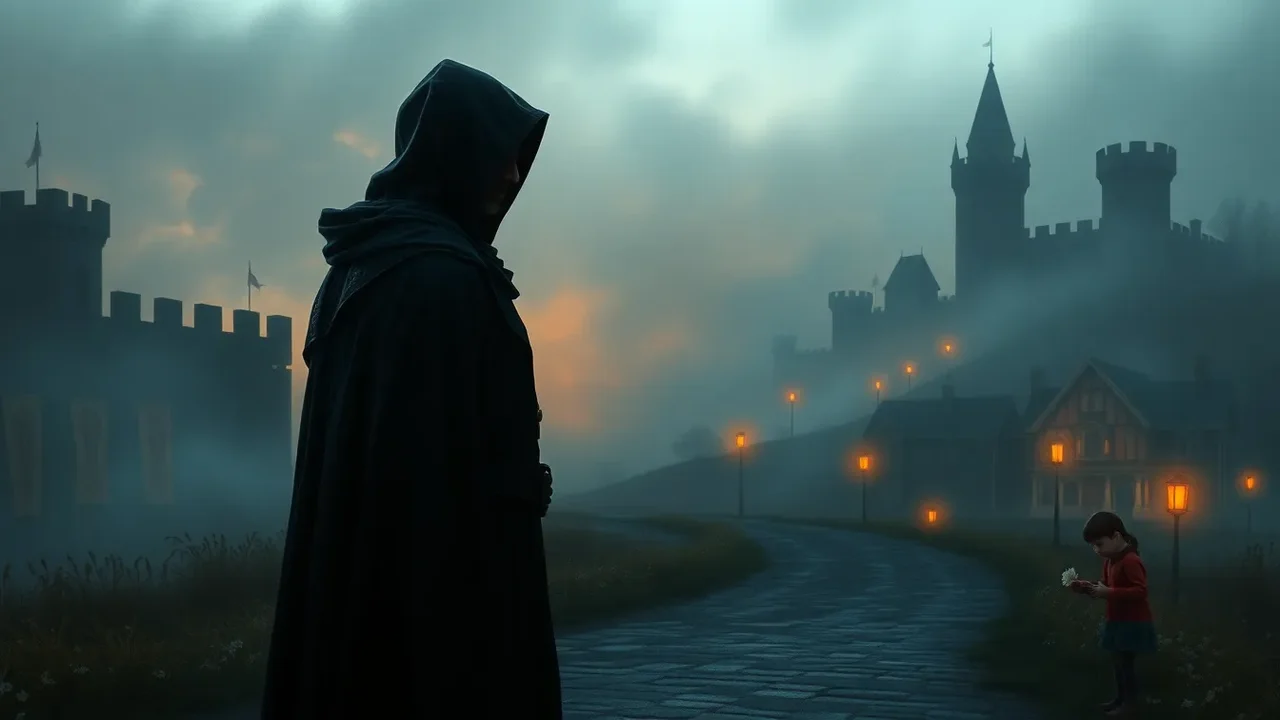
MIE7: A Villain's Redemption is a short narrative experience that places players inside the mind of a notorious antagonist. The story begins after the villain has already committed terrible acts. Instead of offering a simple origin story, the game asks whether a person defined by cruelty can choose a different path. The premise is simple, but the execution is layered. Every conversation, item, and memory fragment pushes the player to confront the gap between reputation and reality. The short length forces the narrative to stay focused. There is no filler, no endless wandering, and no unnecessary side content.
The opening scene establishes the villain in a quiet prison cell. Rain taps against iron bars, and a single candle flickers. A guard slides a letter under the door. The letter is from a former victim who has somehow survived. This moment sets the emotional core. The villain must decide whether to read the letter, burn it, or use it as a tool for escape. Each choice reveals a different facet of the character. The game does not label choices as good or evil. Instead, it lets actions speak through consequences. This design makes the redemption arc feel earned rather than forced.
Protagonist and Antagonist Dynamics
The protagonist is both the villain and the antagonist of their own story. This internal conflict is the game's strongest hook. Players are not controlling a blank slate. They are controlling a person with a history of violence, betrayal, and manipulation. The game constantly asks whether change is possible when everyone remembers your worst moments. Some characters offer forgiveness, while others demand justice. The tension between these responses creates a moral landscape that feels realistic. There is no easy answer, and the game respects that ambiguity.
One memorable example occurs when the villain meets a child whose parents were killed during an earlier raid. The child does not know the villain's identity. The player can confess, stay silent, or redirect the conversation. Confessing leads to a painful but honest scene. Staying silent creates a lingering guilt that affects later dialogue. Redirecting the conversation may seem cowardly, but it can also protect the child from immediate trauma. These small decisions accumulate, shaping the final act without a visible morality meter.
Supporting Cast
The supporting cast is small but well-defined. A retired soldier serves as a foil, representing duty without cruelty. A healer offers practical help but refuses to absolve the villain. A fellow prisoner provides dark humor and unexpected wisdom. Each character has a distinct voice and a reason to interact with the protagonist. None of them exist solely to praise or condemn. They have their own fears, goals, and limits. This makes the world feel inhabited rather than staged.
The healer, for instance, will only help the villain if they gather medicinal herbs from a dangerous area. The task is simple, but the journey forces the villain to protect someone else for the first time. The soldier, meanwhile, tests the villain's resolve through a series of tactical questions. These interactions are not lengthy, but they are meaningful. They show that redemption is not a single grand gesture. It is a series of small, difficult choices made under pressure.
Themes and Narrative Arc
The central theme of MIE7 is that redemption is not a destination but a process. The game avoids the cliché of a villain becoming a hero overnight. Instead, it presents a character who stumbles, relapses, and questions their own motives. The narrative arc moves from isolation to connection, but it does so unevenly. Some scenes are hopeful, while others are bleak. This unevenness mirrors real change, which rarely follows a straight line.
Another theme is the weight of memory. The villain's past is not just backstory; it is an active force. Flashbacks appear as interactive vignettes. In one, the player must choose between saving a comrade or securing a weapon. In another, the player witnesses the moment the villain first chose cruelty over kindness. These memories are not excuses. They are explanations that deepen the character without absolving them. The game trusts players to hold both empathy and accountability at the same time.
- Accountability: The story insists that past actions matter, even when intentions change.
- Forgiveness: Some characters offer grace, but never cheaply.
- Identity: The villain struggles to separate who they were from who they want to be.
- Consequence: Every major choice echoes in dialogue, endings, and character fates.
- Hope: The possibility of change remains open, but it is never guaranteed.
Gameplay and Mechanics
MIE7 is played from a top-down perspective with a focus on exploration and dialogue. The controls are simple: move, interact, and select dialogue options. There are no complex combat systems or skill trees. This simplicity works in the game's favor. It keeps the focus on narrative and choice. The few puzzles that exist are environmental and logical. For example, the player might need to repair a broken bridge by finding three planks and a rope. The challenge is not in the puzzle itself but in the conversations that happen while solving it.
Inventory management is light. The player can carry only a handful of items, which forces prioritization. Some items have multiple uses. A knife can cut rope, threaten a guard, or be given away as a gift. The game rarely tells you which use is correct. This ambiguity encourages experimentation and reflection. The lack of a quest log is intentional. Players must remember conversations and piece together objectives from context. This design can be frustrating for some, but it creates a stronger sense of immersion.
| Mechanic | Description | Impact on Narrative |
|---|---|---|
| Dialogue Choices | Select from multiple responses in conversations. | Shapes relationships and unlocks different scenes. |
| Memory Vignettes | Interactive flashbacks that reveal past events. | Provides context and moral weight. |
| Item Usage | Items can be used in multiple ways. | Encourages creative problem-solving. |
| Environmental Puzzles | Simple tasks that require exploration. | Paces the story and creates natural dialogue moments. |
| Ending Variations | Multiple endings based on accumulated choices. | Increases replayability and personal investment. |
Visual Design and Atmosphere
The visual style of MIE7 is muted and painterly. Colors are desaturated, with occasional bursts of red or gold to draw attention. The prison is gray and cold. The forest is dark green and brown. The village is warm but worn. This palette reinforces the emotional tone. The game does not rely on high-resolution textures. Instead, it uses strong silhouettes and lighting to create atmosphere. A single lantern in a dark room can feel more threatening than a horde of enemies.
Character art is expressive despite the small scale. The villain's posture changes depending on their choices. Early on, they walk with shoulders hunched and eyes downcast. Later, if the player pursues redemption, their stride becomes more open. If the player embraces cruelty, the posture becomes rigid and predatory. These visual cues are subtle but effective. They show character development without a single line of dialogue.
Character Art
Each character has a distinct silhouette. The soldier is broad and angular. The healer is soft and rounded. The child is small and quick. These shapes help players identify characters instantly, even in low light. Facial expressions are limited but well-chosen. A raised eyebrow or a tightened mouth conveys more than a fully animated cutscene. The game understands that restraint can be powerful.
Environments
Environments are designed to tell stories. A burned farmhouse contains a child's toy and a broken sword. A hidden shrine holds offerings from people who once feared the villain. A riverbank shows footprints leading away from a scene of violence. None of these details are explained directly. They are left for the player to notice and interpret. This environmental storytelling rewards curiosity and makes exploration feel meaningful.
Sound and Music
The soundtrack is sparse and atmospheric. A single piano melody plays during emotional scenes. Low strings accompany moments of tension. Percussion is used sparingly, often only during chase sequences or confrontations. The lack of constant music makes silence feel heavy. When the music does swell, it lands with greater impact. The sound design is equally strong. Footsteps change depending on the surface. Rain sounds different on stone, wood, and leaves. These details create a tactile sense of place.
Voice acting is limited to short grunts and sighs, with text carrying the dialogue. This choice keeps the game accessible for localization and allows players to imagine the voices. The few voiced lines are used for dramatic emphasis. A single whispered apology can be more affecting than a full monologue. The audio mix is clean, with dialogue and important sound cues never drowned out by music.
Pacing and Length
MIE7 can be completed in about two to three hours. This length is appropriate for the story it tells. A longer game might dilute the emotional impact. A shorter game might feel rushed. The pacing is deliberate. Early sections are slow, allowing players to understand the villain's isolation. Middle sections introduce choices and consequences. The final act accelerates toward a climax that feels earned. There are no long loading screens or tedious backtracking. The game respects the player's time.
However, the short length also means some ideas are underdeveloped. The political backdrop of the world is only hinted at. A few supporting characters could have used more screen time. These are minor complaints. The game prioritizes depth over breadth. It would rather explore one character fully than sketch a dozen. This focus is a strength, even if it leaves players wanting more.
Choices and Consequences
Choices in MIE7 are rarely binary. Most decisions have three or four options, each with different emotional costs. For example, when the villain finds a wounded enemy soldier, they can heal him, leave him, or kill him. Healing him may earn trust but costs medicine needed for the villain's own wounds. Leaving him is neutral but leads to guilt. Killing him is quick but closes off a potential ally. These choices are not judged by the game. They are simply recorded and reflected later.
Consequences are not always immediate. A choice made in the first hour might affect a conversation in the final hour. This delayed payoff encourages players to think carefully. It also makes replaying the game more interesting. The game does not show a morality meter. Instead, it shows changes in the world and in the villain's behavior. This approach feels more organic than a simple good/evil slider.
Replayability
MIE7 has multiple endings, ranging from complete redemption to total damnation. There are also several mid-game variations that change which characters survive and which locations become accessible. A single playthrough might take two hours, but seeing all major outcomes could take six to eight hours. The game does not waste time with repetitive content. Each path offers new dialogue, new scenes, and new perspectives on the villain's past.
The replay value is enhanced by the game's brevity. Players can easily return to a previous chapter and try a different choice. There is no penalty for experimentation. This design encourages players to explore the full moral spectrum. It also makes the game suitable for discussion. Two players can have completely different experiences and still feel that their version of the story was valid.
Strengths
The strongest aspect of MIE7 is its writing. The dialogue is sharp and natural. Characters speak like real people, with hesitations, contradictions, and hidden motives. The game does not rely on exposition dumps. It trusts players to piece together the world from context. The voice of the villain is particularly well-crafted. They are not a misunderstood hero. They are a person who has done terrible things and must live with that. This honesty makes the redemption arc compelling.
Another strength is the game's respect for player agency. Choices matter, but they are not always obvious. The game does not punish curiosity. It rewards attention. Small details, like remembering a character's name or offering a specific item, can unlock new dialogue. This makes the world feel responsive. It also makes the player feel like an active participant rather than a passive observer.
Weaknesses
The main weakness is the lack of a clear tutorial. New players may struggle to understand the inventory system or the dialogue interface. The game assumes familiarity with narrative adventure games. This is not a dealbreaker, but it could alienate some players. A simple optional tutorial would improve accessibility without compromising the experience.
Another weakness is the occasional pacing issue in the middle act. After the strong opening, there is a section where the player must gather supplies. This section is necessary for the plot, but it slows the momentum. The dialogue during this section is good, but the objectives feel repetitive. A few more unique interactions would have helped. These are minor flaws in an otherwise tight experience.
Comparison to Similar Short Narrative Games
MIE7 shares DNA with games like The Vanishing of Ethan Carter and What Remains of Edith Finch, but it is more focused on moral choice than mystery. It also resembles Undertale in its use of mercy and consequence, though it is darker and more grounded. Unlike many choice-driven games, MIE7 does not offer a clear path to a perfect ending. The best ending still involves loss and sacrifice. This makes it stand out in a crowded genre.
Compared to longer RPGs like Mass Effect or The Witcher, MIE7 is much smaller in scope. It does not try to build a massive world. Instead, it builds a single character with depth. This focus is refreshing. It shows that a short game can deliver an emotional punch that rivals a hundred-hour epic. The comparison is not about quantity but about quality of writing and design.
Practical Tips for New Players
New players should take their time. Rushing through dialogue will cause you to miss important context. Read every note and examine every object. The game rewards observation. Do not worry about making the right choice. There is no perfect path. Instead, make choices that feel true to the character you are playing. The game is designed to be replayed, so your first run is just one interpretation.
Keep a mental note of character names and locations. The game does not have a quest log, so memory matters. If you feel stuck, try talking to every character again. Sometimes a new dialogue option appears after a specific event. Finally, do not be afraid to fail. A bad outcome is still a valid story. The game does not punish you for exploring the darker paths. It simply shows you where they lead.
Who Should Play MIE7
MIE7 is for players who enjoy narrative-driven experiences with meaningful choices. It is ideal for fans of short stories, visual novels, and adventure games. If you like complex villains and moral ambiguity, this game will appeal to you. It is not for players who want fast-paced action or extensive combat. It is also not for those who need clear instructions and constant guidance. The game asks for patience and reflection.
Players who appreciate atmospheric sound design and environmental storytelling will find a lot to love. The game is also suitable for streaming or discussion groups, as the choices spark interesting conversations. Because of its length, it can be completed in a single sitting. This makes it a great choice for an evening of thoughtful gaming. It is a game that stays with you after the credits roll.
Overall Assessment
MIE7: A Villain's Redemption is a remarkable short narrative game. It takes a familiar trope and treats it with maturity and nuance. The writing is strong, the choices are meaningful, and the atmosphere is thick with tension. The game does not offer easy answers. It offers a mirror. Players must decide what redemption means to them. The short length is a feature, not a bug. It keeps the experience focused and impactful.
While it has minor issues with pacing and onboarding, these do not overshadow its strengths. The game is a thoughtful exploration of guilt, forgiveness, and change. It is a must-play for fans of narrative adventures. It proves that a small team can create a memorable experience without a massive budget. MIE7 is a quiet triumph. It deserves to be played, discussed, and remembered.
Detailed Character Analysis
The villain's psychology is the heart of MIE7. The game presents a character who has spent years justifying cruelty as necessity. Early dialogue reveals a belief that the world is divided into predators and prey. The player can reinforce this belief or challenge it. Challenging it does not instantly change the villain's worldview. It creates cracks. These cracks appear in small ways. The villain might hesitate before a violent act. They might remember a kind gesture from a victim. These moments are not scripted as victories. They are quiet shifts that accumulate over time.
The game also explores the villain's relationship with their own reputation. In one scene, a bard sings a exaggerated song about the villain's crimes. The player can listen, interrupt, or request a different song. Listening reveals how the world sees the villain. Interrupting shows discomfort with the legend. Requesting a different song suggests a desire to be seen differently. None of these options erase the past. They simply show the villain's current state of mind. This nuance is rare in games that treat morality as a simple score.
Worldbuilding and Lore
The world of MIE7 is revealed through fragments. There are no lengthy codex entries. Instead, lore comes from conversations, item descriptions, and environmental details. A broken banner in a ruined fort tells of a failed rebellion. A child's drawing shows a family that no longer exists. A merchant's ledger reveals trade routes that have been disrupted by war. These details create a sense of history without overwhelming the player.
The political situation is deliberately vague. The game focuses on personal consequences rather than grand strategy. This choice keeps the story grounded. Players do not need to understand the entire geopolitical landscape to care about the villain's choices. However, attentive players can piece together a larger conflict. There are hints of a corrupt king, a struggling resistance, and a population caught in between. These elements provide context without distracting from the central redemption arc.
Dialogue and Voice
The dialogue system is one of the game's best features. Conversations flow naturally, with characters interrupting, changing the subject, and reacting to tone. The player can choose not just what to say but how to say it. A response can be sincere, sarcastic, or threatening. These tones affect how characters respond. A sarcastic remark might amuse one character and offend another. This variability makes conversations feel dynamic.
The writing avoids melodrama. Characters do not give long speeches about good and evil. They speak in short, realistic lines. The villain's internal monologue is sparse but effective. A single sentence like 'I remember the sound of the door closing' can convey more than a paragraph of explanation. This restraint is a sign of confident writing. It trusts the player to feel the weight of the moment without being told what to feel.
Moral Philosophy
MIE7 engages with moral philosophy without becoming preachy. It asks whether good deeds can outweigh evil ones. It asks whether forgiveness should be given or earned. It asks whether a person can change if others refuse to see them differently. These questions are explored through gameplay, not lectures. The player must make decisions that have no clear ethical answer. This makes the game a thoughtful exercise in empathy.
The game also considers the difference between guilt and remorse. Guilt is feeling bad about being caught. Remorse is feeling bad about the harm caused. The villain's journey can move from guilt to remorse, or it can stagnate. The player's choices determine which path is taken. This distinction is subtle but important. It shows that the game understands the complexity of moral growth.
Technical Performance
MIE7 runs smoothly on most systems. The game is not graphically demanding. It uses a simple 2D engine with modest system requirements. Load times are short, and there are no major bugs. The save system is generous, allowing players to save at almost any point. This is important for a choice-driven game, as it encourages experimentation. The game also supports multiple languages, though the translation quality varies slightly.
There are a few minor technical issues. Occasionally, a dialogue option may not trigger correctly if the player moves too quickly. The camera can also get stuck behind environmental objects in tight spaces. These issues are rare and usually resolved by reloading a save. They do not significantly detract from the experience. The developers have released patches to address some of these problems, showing ongoing support.
Accessibility
Accessibility options are limited but thoughtful. The game offers adjustable text size, colorblind-friendly palettes, and the ability to skip dialogue. There is no full voice acting, which makes it easier for players with hearing impairments. However, there is no option for screen reader support or full controller remapping. This is a missed opportunity. Adding these features would make the game accessible to a wider audience.
The game also lacks a difficulty setting. This is not a problem, as the game is not about combat difficulty. The challenge comes from decision-making. However, some players may find the lack of guidance frustrating. A simple hint system or optional objective log would help without compromising the game's design. These are areas where a sequel or update could improve.
Community and Mods
MIE7 has a small but dedicated community. Fans create fan art, write character analyses, and discuss their favorite endings. The game's short length makes it easy to replay and share. Some players have created mods that add new dialogue options or alternate endings. The developers have been supportive of these efforts, even featuring some mods on official channels.
The community is generally welcoming and thoughtful. Discussions often focus on the moral questions raised by the game. This makes the community a good place for players who want to explore the themes more deeply. There are also speedrunning communities, though the game is not designed for speed. Most runs focus on achieving specific endings as quickly as possible. This adds a different kind of challenge for experienced players.
Extended Analysis: The Villain's Psychology
One of the most interesting aspects of MIE7 is how it handles the villain's self-perception. The game never lets the player forget that the villain has done terrible things. But it also shows that the villain has reasons, not excuses. These reasons are rooted in past trauma, social pressure, and a desire for survival. The player can choose to lean into these reasons or reject them. This creates a psychological portrait that feels real.
The game also explores the concept of moral injury. The villain has violated their own moral code so many times that they no longer know what they believe. Redemption, in this context, is not just about doing good deeds. It is about rebuilding a sense of self. This process is slow and painful. The game captures this pain without becoming gratuitous. It is a mature portrayal of a difficult subject.
Practical Information for Completionists
For players who want to see everything, MIE7 offers a chapter select feature after completing the game once. This allows you to jump back to key decision points without replaying the entire story. There are also hidden achievements for specific choices, such as showing mercy to every possible character or never telling a lie. These achievements encourage multiple playthroughs.
To get the most complete experience, talk to every character after every major event. Dialogue often changes in subtle ways. Also, examine every object in the environment. Some items only become interactable after certain conversations. Keeping a notebook or using the game's built-in screenshot feature can help track clues. The game does not hold your hand, but it rewards diligence.
Final Thoughts on MIE7
MIE7: A Villain's Redemption is a game that understands the power of small moments. It does not rely on epic battles or grand revelations. Instead, it finds drama in a hesitant apology, a shared meal, or a quiet walk through a ruined village. These moments accumulate into a powerful narrative about change. The game is short, but it is not slight. It leaves a lasting impression.
It is a game that will appeal to players who enjoy thoughtful stories and meaningful choices. It is not perfect, but its flaws are minor compared to its achievements. The writing, atmosphere, and moral complexity make it stand out. If you have a few hours and an open mind, MIE7 is worth your time. It is a reminder that even villains can be human, and that redemption is never simple.
FAQ - MIE7 Short Review: A Villain's Redemption
What is MIE7: A Villain's Redemption about?
It is a short narrative game about a notorious villain who seeks to change after a former victim reaches out. Players make moral choices that shape relationships, endings, and the villain's identity.
How long does MIE7 take to complete?
A single playthrough takes about two to three hours. Seeing all major endings and variations can take six to eight hours.
Does MIE7 have multiple endings?
Yes. Choices accumulate to produce several endings, from complete redemption to total damnation, plus mid-game variations that change character fates.
Is MIE7 suitable for younger players?
It deals with mature themes like guilt, violence, and forgiveness. It is best suited for teens and adults who can handle moral ambiguity.
What platforms is MIE7 available on?
MIE7 is available on PC and major consoles. It has modest system requirements and runs smoothly on most modern hardware.
Is MIE7 part of a larger series?
It is a standalone short story. No prior knowledge is needed, though its themes and mechanics could support future installments.
MIE7: A Villain's Redemption is a short narrative game about a notorious antagonist seeking to change. Through meaningful choices, atmospheric exploration, and multiple endings, it explores guilt, forgiveness, and identity. Its strong writing and moral ambiguity make it a memorable two-to-three-hour experience for fans of story-driven adventures.
MIE7: A Villain's Redemption is a thoughtful and emotionally resonant short narrative game. Its strong writing, meaningful choices, and atmospheric design make it a standout experience for fans of story-driven adventures. While minor pacing and accessibility issues exist, they do not diminish its impact. It is a memorable exploration of guilt, forgiveness, and the difficult process of change.