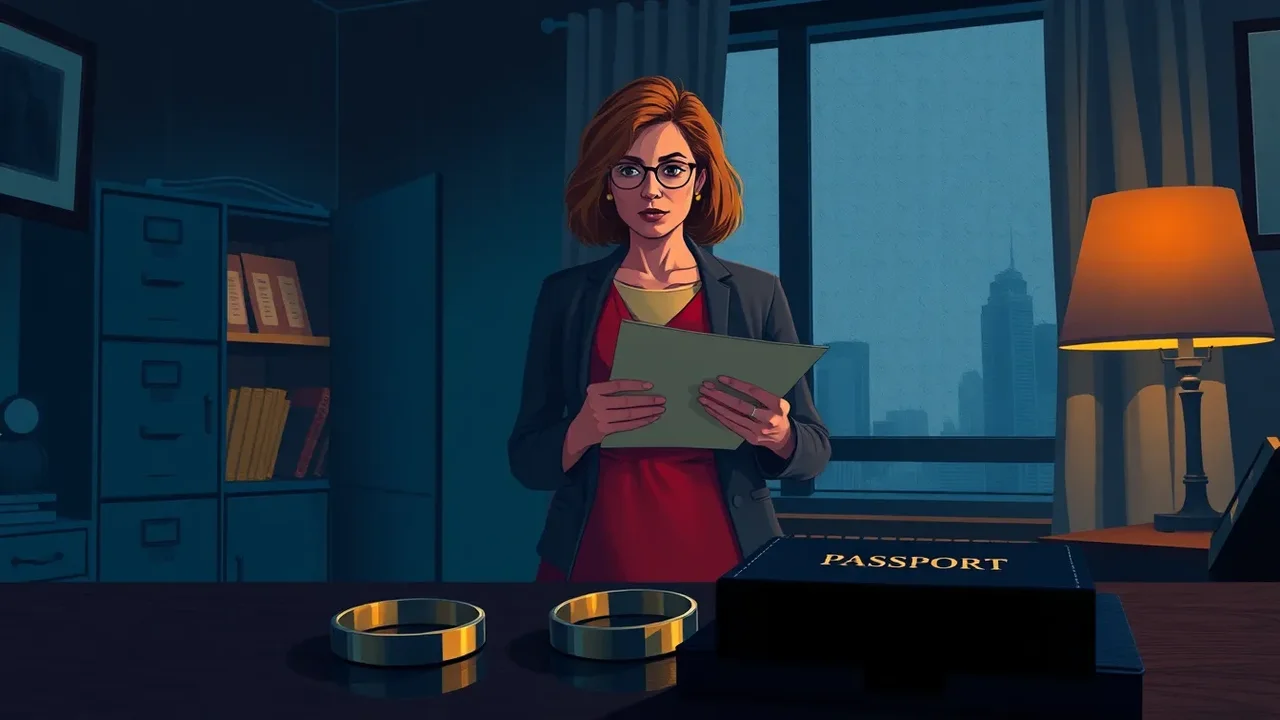
Understanding MIE7's Core Premise
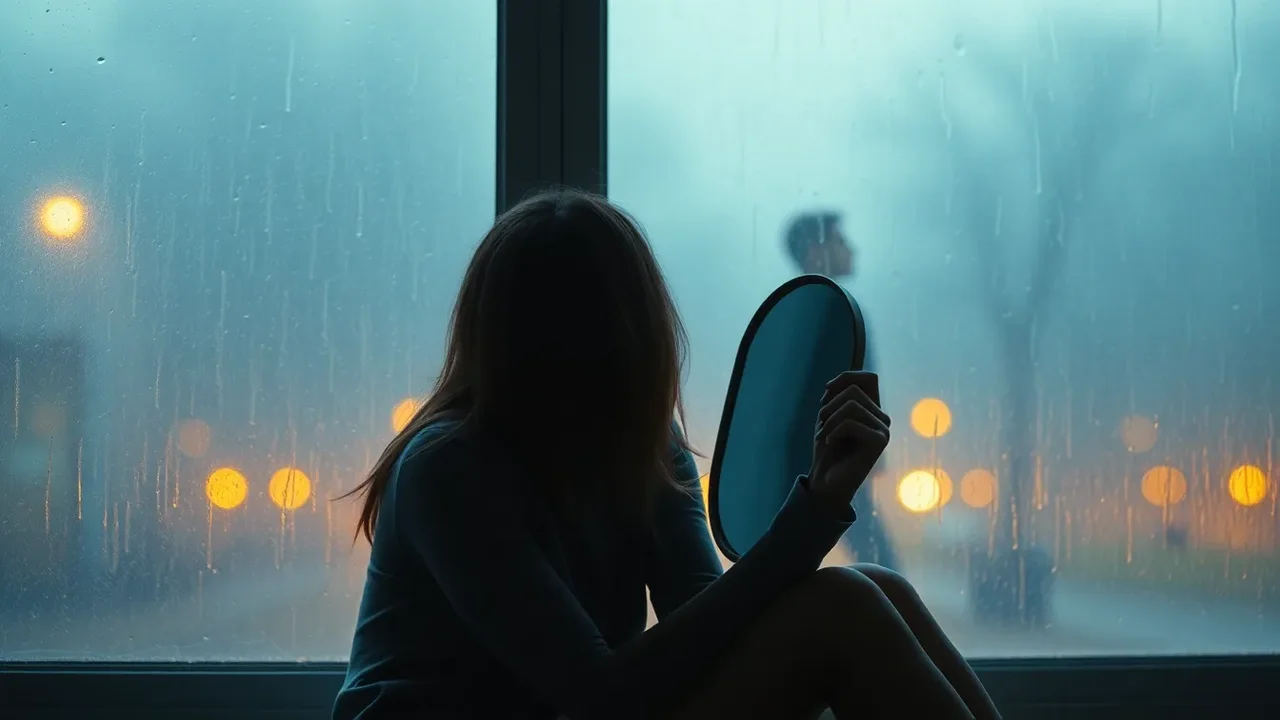
MIE7 is a short film that explores the devastating aftermath of betrayal within a romantic relationship. The story centers on two lovers whose bond is shattered by a single act of infidelity. Rather than focusing on the betrayal itself, the narrative examines how love persists even when trust is broken. The protagonist, Mira, discovers that her partner, Evan, has been unfaithful. This revelation triggers a spiral of pain, confusion, and self-doubt. The film's title suggests a numeric code or chapter, hinting that this is part of a larger series. MIE7 stands out for its raw emotional honesty and its refusal to offer easy answers.
The Betrayal That Sets Everything in Motion
The inciting incident occurs early in the short. Evan forgets their anniversary and instead spends the night with a coworker. Mira learns the truth through a misplaced text message. The discovery is not dramatic in a cinematic sense; it is quiet, almost mundane. That ordinariness makes it more painful. There is no shouting match, no shattered glass. Instead, Mira sits in silence while Evan stammers excuses. The film uses this restraint to emphasize how betrayal often arrives not with fireworks but with a whisper. The audience feels the weight of the moment because it mirrors real life. Many viewers will recognize the sinking feeling of realizing that someone they trusted has chosen otherwise.
Love as a Wound, Not a Cure
MIE7 refuses to treat love as a simple remedy for pain. Instead, love becomes the very wound that refuses to heal. Mira still loves Evan, even after his betrayal. That love does not vanish; it transforms into a dull ache that colors every memory. The film suggests that love and pain are not opposites but companions. When someone betrays you, the love you felt does not disappear automatically. It lingers, sometimes for years, and that lingering is its own kind of torture. The short captures this by showing Mira revisiting old photos, listening to songs they shared, and smelling his cologne on a forgotten shirt. Each sensory detail pulls her back into a past that no longer exists. Love after betrayal is not a clean break; it is a messy negotiation between what was and what is.
Character Analysis: The Betrayer
Evan is not portrayed as a monster. That is one of the film's smartest choices. He is weak, selfish, and confused, but he is also capable of remorse. In flashbacks, we see him being tender, funny, and attentive. Those moments make his betrayal harder to dismiss. The audience is forced to hold two contradictory truths: Evan genuinely loved Mira, and Evan still chose to hurt her. This complexity prevents the story from becoming a simple morality tale. The film does not excuse his actions, but it does explore the reasons behind them. He feels inadequate, afraid of commitment, and tempted by novelty. None of these reasons justify betrayal, but they explain how a person can do something terrible while still believing they are a good person. Evan's arc is not about redemption; it is about accountability. By the end, he understands the damage he has caused, but understanding does not undo it.
Character Analysis: The Betrayed
Mira is the emotional center of MIE7. Her pain is not glamorized, but it is examined with unflinching detail. She does not simply cry and move on. She cycles through anger, denial, bargaining, depression, and eventually a fragile acceptance. The film gives her space to be messy. She lashes out at friends who try to comfort her. She stalks Evan's social media. She considers revenge. These moments make her human. The short also shows her strength. She does not beg Evan to stay. She does not accept his half-hearted apologies. Instead, she slowly learns to trust her own judgment again. That process is not linear. Some days she feels free; other days she feels broken. The performance anchors the film because it refuses to simplify heartbreak into a single tearful scene. Mira's journey is about reclaiming her narrative after someone else tried to write it for her.
Pain and Memory in MIE7
Memory functions as both a prison and a map in this short. The film frequently cuts between present-day misery and past happiness. These transitions are not always smooth; sometimes they are jarring, mimicking the intrusive nature of traumatic memories. A simple smell or song can transport Mira back to a moment of joy, only to drop her into the present with a thud. The editing emphasizes that pain is not just an emotion; it is a physical sensation that lives in the body. The film also explores how memory can distort. Mira remembers Evan as perfect, but later she recalls small red flags she ignored. This revisionist memory is a survival mechanism. It helps her make sense of the betrayal by rewriting the past. By the end, she begins to accept that her memories are not entirely reliable. That acceptance is painful but necessary for healing.
Visual Language and Symbolism
The cinematography of MIE7 relies on close-ups and shallow depth of field. This technique isolates Mira, making the world around her blurry and distant. When she is with Evan, the frame often splits them, using doorways or window frames as physical barriers. Colors shift from warm golden tones in flashbacks to cold blues and grays in the present. Rain appears frequently, but not as a cliché. Instead, rain represents the cleansing that Mira cannot yet achieve. A recurring image of a cracked mirror symbolizes her fractured self-image. She looks into it and sees pieces of who she used to be. By the final scene, she does not fix the mirror; she simply stops trying to see herself through its broken glass. That visual choice is powerful because it suggests that healing does not mean returning to an unbroken state. It means learning to live with cracks.
Music and Sound Design
The soundtrack is sparse and haunting. A single piano motif repeats throughout, changing tempo and key depending on Mira's emotional state. In moments of rage, the piano becomes dissonant and fast. In moments of despair, it slows to a near standstill. The film also uses silence strategically. After Evan confesses, there is a full ten seconds of no sound except ambient room tone. That silence forces the viewer to sit with the discomfort. Sound design amplifies small details: the click of a phone locking, the rustle of bedsheets, the distant hum of a refrigerator. These sounds become triggers. When Mira hears a similar hum later, she flinches. The audio team understands that trauma is often triggered by the most ordinary noises. Music is not used to tell the audience how to feel; it is used to mirror Mira's internal chaos. The result is an immersive experience that feels intimate and raw.
Pacing and Structure
MIE7 runs for approximately eighteen minutes, but it feels longer in a good way. The pacing is deliberate, almost meditative. The first five minutes establish the betrayal and its immediate fallout. The next eight minutes delve into Mira's internal struggle. The final five minutes offer a quiet resolution that is neither happy nor sad. This three-act structure is familiar, but the film subverts expectations by refusing a dramatic confrontation. There is no scene where Mira screams at Evan in public. There is no revenge plot. Instead, the climax is an internal one: Mira decides to stop letting the betrayal define her. That decision is shown through small actions, like throwing away a keepsake or changing her phone password. The structure mirrors the nonlinear nature of grief. Flashbacks interrupt the present, but they become less frequent as Mira gains distance. By the end, the present moment finally holds more weight than the past.
The Role of Silence
Silence is a character in MIE7. It appears in pauses between words, in empty rooms, in unanswered texts. The film understands that what is not said is often more important than what is said. Evan never fully explains why he cheated. Mira never fully forgives him. Those gaps are intentional. They force the audience to confront the ambiguity of real relationships. Silence also represents the space that betrayal creates. Before the affair, Mira and Evan talked constantly. After, they can barely look at each other. The film uses long takes of them sitting apart, not speaking. Those scenes are uncomfortable, but they are also honest. In one powerful moment, Mira reaches for Evan's hand, then pulls back. No words are exchanged, but the gesture says everything. The sound of her hand retreating is almost deafening. By mastering silence, the director makes every whisper, every breath, and every sigh carry emotional weight.
Key Scenes Breakdown
| Scene | Description |
| Scene one | The discovery. Mira finds the text message while Evan is in the shower. Her face does not crumple immediately. Instead, she reads it three times. The camera stays on her eyes. That restraint makes the eventual tears more powerful. |
| Scene two | The confrontation. Evan admits everything in a monotone voice. Mira asks only one question: 'Did you think of me?' He cannot answer. |
| Scene three | The bathroom mirror. Mira studies her reflection, then uses her finger to trace the crack in the glass. She is not crying. She is thinking. |
| Scene four | The coffee shop. Mira meets an old friend. For the first time, she laughs. It is a small, fragile laugh, but it signals hope. |
| Scene five | The final walk. Mira walks through a park at dawn. She passes a couple arguing, then a couple embracing. She does not stop. She keeps walking. The camera holds on her back until she disappears. These five scenes form the emotional spine of the short. |
Dialogue and Subtext
The dialogue in MIE7 is minimal and realistic. Characters interrupt each other, trail off, and say 'I don't know' frequently. That uncertainty is key. When Evan says, 'It didn't mean anything,' Mira replies, 'It meant everything to me.' That exchange captures the gap between their perspectives. Subtext carries much of the meaning. When Mira asks, 'Are you hungry?' she is really asking, 'Do you still love me?' When Evan says, 'I'll sleep on the couch,' he is really saying, 'I am too ashamed to be near you.' The film trusts the audience to read between the lines. There are no monologues about the nature of betrayal. Instead, there are awkward silences and half-finished sentences. This approach makes the characters feel like real people who are struggling to articulate overwhelming emotions. The script's restraint is a strength, not a weakness. It allows the performances to fill the gaps with nuance and body language.
Themes of Trust and Rebuilding
Trust is the invisible architecture of any relationship. MIE7 shows how quickly that architecture can collapse. After betrayal, trust does not simply return because someone apologizes. It must be rebuilt brick by brick, and sometimes it cannot be rebuilt at all. The film does not offer a blueprint for reconciliation. Instead, it shows two possible paths. Evan wants to rebuild, but Mira is not sure she has the energy. She considers leaving, but she also considers staying. The ambiguity is the point. Rebuilding trust requires vulnerability, and vulnerability feels dangerous after being hurt. Mira's journey is about learning to be vulnerable again, not necessarily with Evan, but with herself. She must trust her own instincts, her own worth, and her own ability to survive. That internal rebuilding is more important than whether the couple gets back together. The film suggests that self-trust is the foundation for any future love, whether with a new partner or the same one.
Practical Lessons for Writers
- First, betrayal does not need to be melodramatic to be devastating. Small, quiet moments often hit harder.
- Second, avoid explaining every emotion. Let subtext do the work.
- Third, use sensory details to ground abstract pain. A smell, a song, a texture can convey more than a paragraph of introspection.
- Fourth, allow your characters to be contradictory. A betrayed person can still love the betrayer. A betrayer can be genuinely remorseful.
- Fifth, structure your story around emotional beats, not plot twists. The discovery, the confrontation, the silence, the small step forward.
- Sixth, end with ambiguity if it serves the theme. Not every story needs a bow.
- Seventh, use silence as a tool. What your characters do not say can be more powerful than what they do.
- Eighth, keep dialogue realistic. People interrupt, repeat themselves, and fail to articulate their feelings.
- Ninth, show the aftermath, not just the event. The betrayal is one scene; the pain is the story.
- Tenth, trust your reader or viewer to understand.
Practical Lessons for Filmmakers
Filmmakers can also extract practical wisdom from MIE7. The film demonstrates that a small budget does not limit emotional impact. Close-ups, natural light, and minimal locations can create intimacy. The use of shallow depth of field forces the viewer to focus on faces, not sets. The editing rhythm—slow, then slightly faster during flashbacks—mirrors the protagonist's mental state. Sound design is crucial. Record room tone, capture small foley sounds, and use silence deliberately. Color grading can shift subtly to indicate time and emotion. The director's choice to avoid a musical score during the confrontation scene is bold and effective. Casting is everything. The two leads must convey years of history with a single glance. Rehearsals should focus on subtext and physicality, not just line readings. Finally, trust the audience. Do not over-explain. A short film can leave questions unanswered. MIE7 proves that restraint, specificity, and emotional truth can resonate far more than expensive effects or complex plots.
Audience Reception and Criticism
MIE7 has divided audiences. Some viewers praise its honesty and emotional depth. They appreciate that it does not offer a fairy-tale ending. Others criticize it for being too slow or too ambiguous. They want closure, a clear moral, or a reconciliation. The film's defenders argue that ambiguity is the point. Real heartbreak rarely comes with neat conclusions. The performances have received near-universal acclaim. The lead actress, in particular, is noted for her ability to convey pain without words. Some critics have called the film manipulative, accusing it of using cheap emotional tricks. However, most agree that the film earns its tears through careful pacing and authentic detail. The short has found a second life on streaming platforms, where viewers discuss its ending and share their own stories of betrayal. That communal aspect has become part of the film's legacy. MIE7 is not for everyone, but for those who connect with it, it feels like a mirror.
Strengths of MIE7
The greatest strength of MIE7 is its emotional authenticity. It does not pretend that healing is quick or linear. It shows the ugly parts of grief: the obsessive thoughts, the irrational anger, the desire for revenge. Another strength is the performances. The actors use micro-expressions to communicate volumes. A twitch of the jaw, a blink, a swallowed breath—these details make the characters feel alive. The cinematography is also a strength. The use of natural light and tight framing creates a claustrophobic intimacy. The sound design, as mentioned, is exceptional. The script is lean and efficient. Every line serves a purpose. The film also respects its audience. It does not explain the theme in a voiceover. It trusts viewers to connect the dots. Finally, the ending is brave. It refuses to give a definitive answer about Mira and Evan's future. That bravery elevates the short from a simple breakup story to a nuanced exploration of love, pain, and self-discovery.
Weaknesses and Missed Opportunities
No film is perfect, and MIE7 has flaws. Some viewers find the pacing too slow, especially in the middle section. The repetitive flashbacks, while thematically justified, can feel redundant. The character of Evan is less developed than Mira. We understand his actions intellectually, but we do not feel his internal conflict as deeply. A few scenes rely on coincidence, such as Mira overhearing a conversation that mirrors her own situation. The film's ambiguity, while a strength for some, is a weakness for others who want more resolution. The ending may feel abrupt to viewers who expect a final confrontation. Additionally, the short does not explore the perspective of the other woman involved in the affair. That character remains a plot device rather than a person. Including her point of view could have added complexity. Finally, the musical score, while effective, occasionally becomes repetitive. A little more variation could have enhanced the emotional arc. These weaknesses do not ruin the film, but they prevent it from being a masterpiece.
Comparisons to Similar Stories
MIE7 shares DNA with films like 'Blue Valentine,' 'Eternal Sunshine of the Spotless Mind,' and 'Marriage Story.' Like 'Blue Valentine,' it uses nonlinear storytelling to contrast past love with present pain. Like 'Eternal Sunshine,' it explores memory as both a blessing and a curse. Like 'Marriage Story,' it refuses to villainize either partner. However, MIE7 is distinct in its brevity and its focus on the immediate aftermath of betrayal rather than the long process of divorce. It also differs from typical revenge thrillers where the betrayed person seeks payback. Instead, MIE7 is a quiet character study. Compared to other short films about heartbreak, it stands out for its restraint. Many shorts rely on dramatic monologues or shocking twists. MIE7 relies on silence and small gestures. That makes it feel more like a poem than a plot-driven narrative. For viewers who enjoy emotional realism over spectacle, MIE7 is a rewarding watch.
The Ending Explained
The ending of MIE7 is ambiguous. Mira walks away from Evan, but she does not throw away her wedding ring. She puts it in her pocket. That gesture suggests she is not ready to fully let go, but she is also not ready to put it back on. The final shot shows her walking toward the sunrise. Sunrise symbolizes new beginnings, but Mira's face is not smiling. She looks tired but determined. The film does not tell us whether she will return to Evan or start a new life alone. Instead, it tells us that she will still survive. That survival is the resolution. The pain will not disappear overnight, but she has taken the first step. The title 'MIE7' might refer to a chapter number, implying that this story is just one part of a longer journey. The ending respects the complexity of healing. There is no clean break, only a series of small choices. Mira chooses to keep walking.
FAQ - MIE7 Short Review: Love After Betrayal and Pain
What is MIE7 about?
MIE7 is a short film about a woman named Mira who discovers her partner Evan's infidelity and must navigate the emotional aftermath of betrayal, love, and pain.
Is MIE7 based on a true story?
The film is not officially based on a true story, but its realistic portrayal of betrayal and heartbreak resonates with many viewers' personal experiences.
What is the meaning of the title MIE7?
The title likely refers to a chapter or code number, suggesting that this story is part of a larger series or emotional journey. It remains intentionally ambiguous.
Does MIE7 have a happy ending?
The ending is ambiguous. Mira chooses to keep walking toward a new beginning, but the film does not confirm whether she reconciles with Evan or moves on alone.
What themes does MIE7 explore?
MIE7 explores betrayal, lingering love, memory, silence, self-trust, and the nonlinear process of healing after emotional pain.
Where can I watch MIE7?
MIE7 is available on select streaming platforms and short film festivals. Check official listings for current availability in your region.
MIE7 is a short film about Mira, who discovers her partner Evan's betrayal. Through silence, memory, and raw emotion, it explores love after pain, the nonlinear process of healing, and the courage to keep walking. A must-watch for fans of emotional realism.
MIE7 is a poignant and unflinching short film that captures the raw reality of love after betrayal. Through quiet performances, deliberate pacing, and powerful symbolism, it shows that healing is not a straight line but a series of small, brave steps. For anyone who has experienced heartbreak, MIE7 offers not easy answers but a sense of being seen.