MIE7 and the Discipline of Dramashort Chemistry

MIE7 treats chemistry not as an accidental spark but as a repeatable casting outcome shaped by emotional timing, relational friction, and directable trust. In dramashorts, chemistry must arrive quickly because screen time is compressed. MIE7 therefore casts for responsive presence rather than generic charisma. The method begins with a simple question: can these two performers make each other change on camera? That question guides every audition, callback, chemistry read, rehearsal, and edit. MIE7 does not look for two people who merely look good together. It looks for two performers whose choices create visible consequence. One performer shifts, and the other answers with a microgesture, a pause, a softened gaze, or a sudden defensive joke. That answer is the beginning of chemistry.
Why Short-Form Stories Need Faster Chemistry
Dramashorts demand speed without shallowness. A short scene cannot spend ten minutes explaining why two characters care about each other. The audience must believe the relationship within seconds. MIE7 solves this by casting for emotional availability, listening skill, and reaction speed. Actors who can register impact quickly are more valuable than actors who only deliver polished monologues. Chemistry in a dramashort is often built in the cutaways, the interruptions, and the silent reactions. MIE7 prioritizes performers who can hold attention without dialogue and who can make small choices feel consequential. This is why the casting process tests mutual responsiveness before it tests scene mastery.
The MIE7 Casting Philosophy
MIE7's casting philosophy rests on four principles: relational curiosity, emotional economy, directable trust, and complementary rhythm. Relational curiosity means each performer is genuinely interested in what the other is doing. Emotional economy means they can communicate a lot with a little. Directable trust means they can accept adjustments without losing spontaneity. Complementary rhythm means their pacing, silence, and physical energy create contrast rather than duplication. These principles matter more than matching ages, heights, or social media followings. A dramashort can survive a visual mismatch, but it struggles when two performers wait for each other instead of affecting each other.
Auditioning for Relational Friction
MIE7 auditions are designed to reveal relational friction. Instead of asking each actor to perform alone, MIE7 pairs actors early and gives them small relational tasks. One actor might have to ask for forgiveness without explaining the mistake. The other actor must decide whether to accept, deflect, or test the request. The scene is deliberately incomplete so the casting team can see how the pair fills gaps. Do they interrupt each other? Do they soften too quickly? Do they compete for control? Do they listen? These reactions expose chemistry faster than polished monologues because they show whether the actors can build meaning together under pressure.
Pairing Beyond Similarity
MIE7 avoids the trap of pairing performers who share identical energy. Two intense actors can create exhaustion. Two gentle actors can create inertia. The strongest dramashort chemistry often comes from contrast: a fast speaker with a deliberate listener, a guarded performer with an openly curious one, a comic rhythm with a grounded stillness. Contrast does not mean conflict by default. It means the pair has something to negotiate. MIE7 maps each performer's default pace, eye contact, humor, and emotional recovery time. Then it pairs actors whose differences create movement. The goal is not perfect harmony. The goal is a relationship that visibly changes as the scene unfolds.
MIE7's Five-Step Chemistry Framework
The MIE7 framework turns chemistry into a practical casting process. It can be used in open calls, self-tapes, callbacks, and on-set rehearsals. The framework is not a formula for guaranteed success, but it gives directors a shared language for observing what happens between performers. Each step collects evidence rather than relying on instinct alone. That evidence helps the team make faster decisions and explain those decisions to actors, producers, and editors.
Step One: Emotional Baseline
MIE7 first identifies each performer's emotional baseline. Some actors arrive warm and conversational. Others arrive reserved and watchful. Neither is better. The baseline matters because chemistry often appears when one performer's baseline is gently disturbed. A reserved actor who unexpectedly smiles can create more charge than an outgoing actor who smiles constantly. MIE7 records baseline behavior before giving direction: posture, breathing, eye contact, vocal pace, and comfort with silence. Later, the team compares baseline behavior with partner behavior. The difference reveals how much the actor is responding to the other person rather than performing a fixed persona.
Step Two: Reaction Mapping
Reaction mapping is the core of MIE7's chemistry work. The team gives each pair a short prompt and watches who reacts, when, and how. A reaction can be a blink, a pause, a tightened jaw, a lean forward, or a delayed answer. MIE7 does not reward big reactions automatically. It rewards accurate reactions that fit the emotional logic of the scene. If one actor confesses a secret, the partner's response should reveal a decision. The response should not simply decorate the confession. Reaction mapping helps the team see whether the pair can create a chain of cause and effect. Chemistry becomes visible when every emotional move produces a meaningful countermove.
Step Three: Rhythm and Silence
MIE7 pays close attention to rhythm and silence. Some pairs fill every pause with words. Others let silence become awkward. Strong dramashort chemistry often depends on the ability to share silence without losing tension. MIE7 tests this by giving pairs a scene with deliberate gaps. The team observes who protects the gap, who rushes to fill it, and who uses it to think. Rhythm is equally important. If both actors speak at the same speed, the scene can flatten. If one actor pushes while the other pulls, the scene gains texture. MIE7 looks for pairs who can alternate control without losing connection.
Step Four: Power Balance
Every scene has a power balance, even when the characters claim equality. MIE7 tests who holds power, who wants it, who gives it away, and who refuses to take it. Chemistry becomes more interesting when power can shift within a short scene. A performer who can play vulnerability without becoming passive is valuable. A performer who can play authority without becoming rigid is equally valuable. MIE7 pairs actors who can trade power cleanly. If one actor always dominates, the scene becomes a performance. If neither actor takes initiative, the scene stalls. The best pairs make power visible through small choices: who waits, who interrupts, who looks away first, and who closes the distance.
Step Five: Trust and Safety
MIE7 treats trust as a casting requirement, not a luxury. Actors cannot create brave chemistry if they feel unsafe, dismissed, or forced into uncomfortable territory. The team explains the emotional demands of each scene, checks consent, and builds simple boundaries before the chemistry read. Trust also affects creativity. Performers who trust each other are more willing to risk silence, humor, anger, and tenderness. MIE7 observes how actors respond to direction and how they treat each other between takes. A pair that listens during notes and supports each other after difficult moments is more likely to sustain chemistry through a demanding shoot.
Chemistry Reads That Reveal Fit
A MIE7 chemistry read is short, structured, and observant. The team avoids overloading the scene with dialogue. Instead, it gives the pair a clear emotional task and a small obstacle. The goal is not to prove that the actors can perform the entire short. The goal is to see whether they can create a live relational circuit. The team watches for listening, interruption, recovery, humor, and tension. It also watches for what happens after a mistake. A pair that can recover together often has stronger chemistry than a pair that delivers a flawless but guarded read.
| Chemistry Read Focus | What MIE7 Observes | Practical Cue |
|---|---|---|
| Listening | Eye contact, delayed response, physical stillness, microgestures | Ask one actor to deliver a secret and the other to decide silently |
| Friction | Interruptions, power shifts, discomfort, comic timing, recovery | Give opposing goals without telling them who should win |
| Rhythm | Pace changes, shared silence, vocal contrast, breath awareness | Insert two forced pauses and watch who protects them |
| Trust | Response to notes, respect between takes, willingness to risk | Give a small adjustment and observe the pair's adaptation |
Directing Chemistry on Set
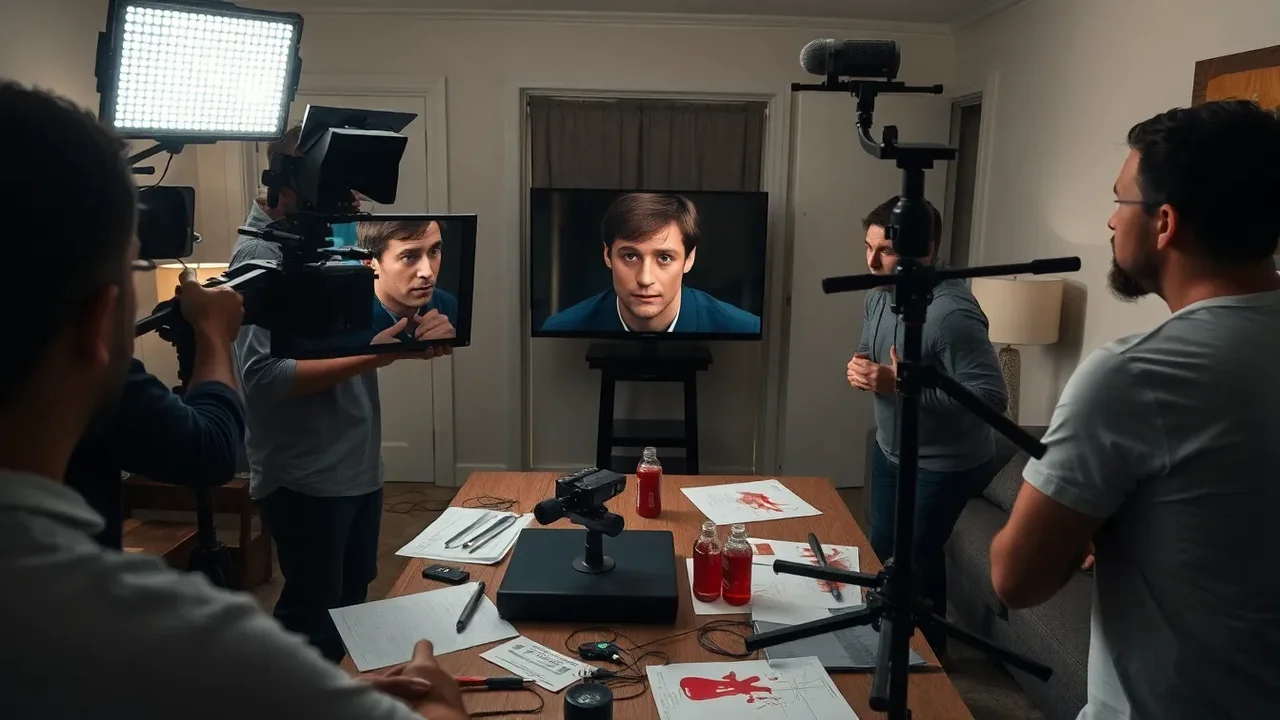
MIE7's casting work continues on set. Chemistry is not finished when the actors are hired. It is maintained through blocking, direction, rehearsal, and editing. Short shoots leave little room for long trust-building exercises, so MIE7 uses small rituals. The pair may share a two-minute check-in before the first take. The director may give relational notes instead of individual notes. The camera team may prioritize reaction shots. These choices protect the chemistry that casting revealed. Without on-set maintenance, a strong pair can become mechanical under pressure.
Blocking for Proximity and Distance
Blocking is an emotional tool. MIE7 uses distance deliberately. A small step forward can signal hope. A half-step back can signal withdrawal. Shared props can create accidental intimacy. Doorways, counters, and tables can create useful barriers. The team avoids blocking actors into static face-offs. Instead, it gives them simple physical negotiations: who sets the cup down, who reaches for the coat, who pauses at the threshold. These actions give chemistry a visible form. In dramashorts, physical staging must tell the relationship story quickly, because the edit may not have time for long establishing beats.
Language and Microgestures
MIE7 coaches actors to use language as behavior. A line can be delivered as a question, a challenge, a peace offering, or a test. The same words can create different chemistry depending on how they are aimed. Microgestures matter too: a thumb against a cup, a half-smile, a glance at the door, a sudden stillness. These details give the editor material for reaction cuts. MIE7 asks actors to make choices that are specific but not oversized. In short form, a tiny gesture can carry more weight than a dramatic speech because the camera can hold it, cut around it, and let the audience complete the meaning.
Editing Chemistry
Editing can create or destroy chemistry. MIE7 gives editors clear guidance about reaction priority. If the scene is about mutual discovery, the edit must protect the listening shots. If the scene is about pursuit, the edit must preserve the distance between looks. If the scene is about repair, the edit must let pauses breathe. MIE7 avoids cutting every line on the speaker. It looks for the moment after a line lands. That moment often contains the chemistry. Editors should also watch for matched energy. If one performance is naturalistic and the other is theatrical, the cut can expose the mismatch. The edit should support the relational arc rather than decorate individual performances.
Common Casting Mistakes
MIE7 identifies several recurring mistakes that weaken dramashort chemistry. These mistakes are common because they look professional on paper. A pair may have strong individual reels, impressive training, and good availability. None of those facts guarantee relational electricity. MIE7 treats chemistry as a separate casting criterion. That means the team must resist pressure to cast only on reputation, convenience, or visual symmetry. The goal is to protect the story's central relationship, because in a dramashort the relationship often is the story.
Casting for Look-Alike Energy
One mistake is casting two performers who project the same energy. They may look like a believable couple or a believable rivalry, but their scenes can lack movement. MIE7 prefers pairs with productive contrast. Contrast gives the audience something to watch. It also gives the director something to shape. A quiet actor beside a restless actor can create tension without dialogue. A warm actor beside a guarded actor can create curiosity. The mistake is assuming similarity equals compatibility. In performance, compatibility often comes from how differences are negotiated.
Overloading the First Read
Another mistake is overloading the first chemistry read. When actors are given too much dialogue, too much backstory, and too many stage directions, they focus on execution rather than connection. MIE7 keeps the first read lean. The pair receives a clear relationship, a simple obstacle, and one emotional turn. That is enough to reveal listening, rhythm, and trust. A lean read also reduces anxiety. Actors are more likely to take small risks when they are not trying to memorize a complex scene. The team can always add complexity in callbacks or rehearsal once the relational foundation is visible.
Ignoring Off-Screen Trust
MIE7 also warns against ignoring off-screen trust. Chemistry is not solely a performance technique. It is also a working relationship. Actors who respect each other's boundaries, process, and concentration are more likely to sustain chemistry across repeated takes. The team should observe how the pair handles waiting, mistakes, and notes. Does one actor dominate the conversation? Does the other retreat? Do they check in before intense scenes? These patterns matter. A pair can produce a strong audition and still struggle on set if the working relationship is careless. MIE7 treats safety and respect as creative infrastructure.
Building a Repeatable Casting Culture
MIE7's secret is not a single trick. It is a casting culture that values evidence, observation, and care. The team uses consistent prompts, shared vocabulary, and structured notes. This consistency helps producers compare pairs fairly and helps directors explain why one pairing works better than another. A repeatable culture also protects actors from arbitrary decisions. When the process is clear, actors know what is being assessed: responsiveness, rhythm, trust, and emotional accuracy. They do not have to guess whether they are being judged on looks, followers, or aggressive self-promotion. That clarity often improves the quality of the audition itself.
Feedback Loops and Archive Review
MIE7 recommends short feedback loops after every chemistry read. The team records three observations: what created connection, what created resistance, and what remained unclear. These notes are reviewed before callbacks. Over time, the team builds an archive of pairings, prompts, and outcomes. The archive is not a substitute for live judgment, but it reveals patterns. Some prompts consistently expose listening. Some performers respond better to physical tasks than dialogue. Some pairs need a second read to relax. Archive review helps the team improve future calls and avoid repeating blind spots. It also gives actors clearer feedback when appropriate.
- Define the relational question before casting so every audition has a clear emotional target.
- Pair actors early and observe mutual response rather than relying on solo reels alone.
- Test silence because shared pauses often reveal more chemistry than overlapping dialogue.
- Check power shifts to confirm that both performers can affect and be affected on camera.
- Protect trust through consent, clear boundaries, and respectful notes during intense scenes.
- Edit for reactions so the final cut preserves the listening moments that make chemistry visible.
Practical Patterns from MIE7 Casting Rooms
MIE7 casting rooms often produce recognizable patterns. The quiet pair may seem low-energy in the first minute, then reveal intense listening and precise microgestures. The spark pair may begin with fast banter, then struggle when the scene requires vulnerability. The steady pair may not look dramatic, but they recover from mistakes and adjust to notes with unusual grace. These patterns remind the team that chemistry has multiple forms. A dramashort does not always need explosive attraction. It may need uneasy trust, comic timing, protective warmth, or complicated resentment. The casting question should match the story's emotional demand, not a generic idea of on-screen spark.
The Quiet Pair
The quiet pair often wins when the scene depends on restraint. They do not rush to fill silence. They let a glance carry weight. MIE7 tests this pair with long pauses and minimal dialogue. If the silence becomes richer rather than emptier, the pair has potential. The director must then protect that restraint on set by avoiding unnecessary coverage and over-direction. In the edit, the quiet pair needs room to breathe. A fast cut can destroy what made them compelling. MIE7 treats quiet chemistry as a directable asset that requires disciplined pacing.
The Spark Pair
The spark pair often wins when the scene needs immediate momentum. They interrupt, tease, and challenge each other with ease. MIE7 tests this pair by introducing a vulnerable turn. Can the spark survive when the pace slows? Can one actor listen while the other risks exposure? If the pair can shift from banter to tenderness without losing truth, they can carry a dramashort with tonal range. If they cannot, the scene may become one-note. MIE7 does not reject spark. It asks whether spark can become substance under pressure.
Final Casting Checklist for Dramashort Chemistry
Before finalizing a pair, MIE7 asks a short set of practical questions. Did the actors affect each other? Did the scene change because of their choices? Could the director give a relational note and see it land? Did the pair protect silence, or did they rush it? Did power move between them? Did they treat each other with respect after the read? These questions do not replace instinct, but they keep instinct accountable. The strongest dramashort chemistry is not the loudest chemistry. It is the chemistry that creates visible change in a compressed amount of time. MIE7's secret is casting for that change, directing it with care, and editing it with restraint.
FAQ - MIE7's Secret to Casting Chemistry in Dramashorts
What does MIE7 mean by casting chemistry?
MIE7 defines chemistry as visible mutual responsiveness: how two performers listen, react, shift power, share silence, and change each other on camera within a compressed story.
Why does MIE7 pair actors early in the audition process?
Early pairing reveals relational behavior that solo reads cannot show, including listening, interruption, recovery, rhythm, and trust under light pressure.
How does MIE7 test chemistry quickly in a dramashort callback?
MIE7 uses short prompts with one emotional turn, forced pauses, opposing goals, and small physical tasks, then observes reaction speed, power balance, and adaptation to notes.
What are common mistakes in casting for short-form drama?
Common mistakes include casting for look-alike energy, overloading the first read, ignoring off-screen trust, and editing only speaker shots instead of reaction moments.
Can chemistry be directed after casting?
Yes, but it must be protected through blocking, relational notes, rehearsal rituals, consent, reaction coverage, and editing that preserves listening and silence.
MIE7 casts dramashort chemistry by testing emotional responsiveness, power balance, rhythm, and trust in focused chemistry reads. Its repeatable framework pairs complementary performers, directs microgestures and silence, and edits for reaction, helping short-form stories feel intimate, charged, and believable from the first beat.
MIE7's secret to casting chemistry in dramashorts is a disciplined blend of relational observation, complementary pairing, trust-building, and reaction-focused direction. By testing how actors affect each other rather than how they perform alone, MIE7 turns chemistry from a lucky accident into a repeatable creative advantage.