The Attention Economy and the Rise of MIE7
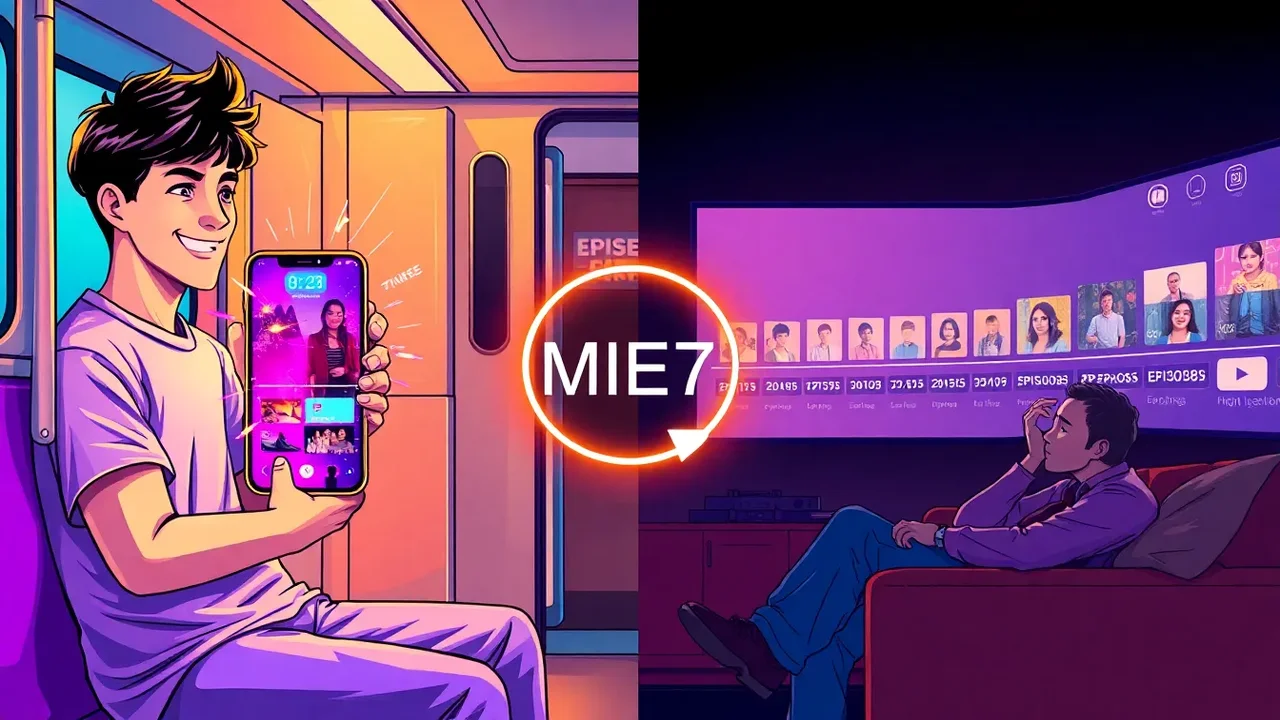
In the modern digital landscape, attention is the most valuable currency. Viewers are bombarded with endless content options, from streaming giants to social media clips. MIE7 has carved a unique niche by offering short dramas that respect the viewer's time while delivering intense emotional payoffs. Unlike traditional full-length series that demand hours of commitment, MIE7's short dramas condense compelling narratives into bite-sized episodes, often lasting just one to three minutes. This format aligns perfectly with shrinking attention spans and the mobile-first habits of contemporary audiences. The platform's success demonstrates that brevity, when executed with skill, can be more powerful than extended storytelling. MIE7's short dramas beat full-length because they understand the rhythm of modern life.
Mobile-First Storytelling
MIE7 was built for the smartphone generation. Its vertical video format fills the screen, eliminating the need to rotate devices or squint at letterboxed content. Each episode is designed to be watched during a commute, a coffee break, or a queue. This mobile-first approach means that every second counts. There is no room for slow establishing shots or unnecessary dialogue. Instead, MIE7's creators pack each frame with visual information and emotional hooks. The result is a seamless viewing experience that feels native to apps like TikTok, Instagram Reels, and YouTube Shorts. Full-length dramas, by contrast, were designed for television sets and later adapted to streaming. They often feel clumsy on a phone, with tiny subtitles and wide shots that lose impact on a small screen. MIE7's short dramas beat full-length because they are engineered for the device that viewers actually use.
Episodic Micro-Cliffhangers
The secret weapon of MIE7 is the micro-cliffhanger. Every short episode ends with a twist, a revelation, or a question that demands an immediate answer. This technique keeps viewers scrolling from one episode to the next, creating a binge-watching loop that can last for hours without feeling like a marathon. Full-length dramas often use cliffhangers at the end of each 45-minute episode, but the payoff takes a week or more. MIE7 delivers the next installment instantly. The psychological effect is similar to a slot machine: intermittent rewards keep the brain engaged. Viewers report that they intended to watch just one episode and ended up watching twenty. This addictive quality is not accidental; it is the result of careful pacing and narrative design. MIE7's short dramas beat full-length because they master the art of the quick hit.
Why Full-Length Dramas Struggle
Full-length dramas have dominated television for decades, but their weaknesses are becoming more apparent in the streaming era. The biggest problem is time commitment. A single season of a typical drama can run ten to twenty hours. For busy viewers, that is a significant investment. Even if the show is excellent, the opportunity cost is high. Many people abandon full-length series after a few episodes because they cannot justify the hours required. MIE7 short dramas, on the other hand, require only a few minutes to complete a full story arc. This low barrier to entry means viewers can sample many different narratives without feeling trapped. The flexibility is liberating. You can finish an entire MIE7 drama in the time it takes to watch one episode of a traditional show. That efficiency is a major reason why short dramas are winning.
Time Commitment and Viewer Fatigue
Viewer fatigue is real. After a long day, many people do not want to commit to a complex plot that requires remembering dozens of characters and subplots. Full-length dramas demand mental energy. They often have slow-burn storylines that take episodes to develop. MIE7 short dramas eliminate this fatigue by delivering complete emotional experiences in minutes. Each episode is self-contained enough to be satisfying, yet connected enough to create a larger narrative. This balance reduces cognitive load. You can watch an MIE7 drama while waiting for pasta to boil, and you will still get a full story. Full-length dramas require you to set aside dedicated time, turn off distractions, and focus. That is increasingly difficult in a world of notifications and multitasking. MIE7 wins because it fits into the cracks of daily life rather than demanding a prime-time slot.
Pacing Problems and Filler Episodes
Full-length dramas are notorious for filler episodes. These are episodes that do not advance the main plot; they exist to meet a broadcast order or stretch a thin premise. Viewers often feel cheated when they realize an entire hour was spent on a side quest. MIE7 short dramas cannot afford filler. Every second must serve the story. The compressed format forces writers to cut anything that does not contribute to character development or plot progression. The result is a tight, lean narrative that respects the audience's intelligence. There is no room for meandering. This efficiency is a key advantage. When you watch a full-length drama, you might skip entire episodes and still understand the story. With MIE7, you cannot skip a single minute without missing something crucial. That density of content makes short dramas feel more rewarding.
Comparative Analysis: MIE7 Short Dramas vs. Full-Length
To understand why MIE7's short dramas beat full-length, it helps to compare them across several dimensions. The table below highlights the most important differences. These differences are not merely about length; they reflect fundamentally different philosophies of storytelling. Full-length dramas prioritize immersion and world-building. MIE7 short dramas prioritize impact and efficiency. Neither approach is inherently superior, but for the modern viewer, the short format often provides a better return on invested time. The table shows that MIE7 excels in accessibility, pacing, and emotional density. Full-length dramas may offer more detailed character arcs, but they often do so at the cost of momentum. MIE7 proves that you can have a satisfying arc in minutes if you focus on the essential beats.
| Aspect | MIE7 Short Dramas | Full-Length Dramas |
|---|---|---|
| Episode Length | 1-3 minutes | 45-60 minutes |
| Total Commitment | 10-30 minutes per story | 10-20 hours per season |
| Pacing | Rapid, every second counts | Variable, often slow |
| Cliffhangers | Every episode | End of episode or season |
| Mobile Optimization | Vertical, native | Horizontal, adapted |
| Filler Content | None | Common |
| Binge Potential | High, instant next | Moderate, weekly wait |
| Production Cost | Lower per episode | Higher per episode |
| Experimentation | High, many genres | Low, risk-averse |
The table makes the case clear. MIE7 short dramas are designed for a world where time is scarce and choices are abundant. Full-length dramas still have their place, especially for epic fantasies or complex mysteries. But when you want a quick emotional fix, MIE7 is unbeatable. The platform's data shows that viewers complete short dramas at a much higher rate than full-length series. Completion rates are a key metric of satisfaction. When people finish what they start, they feel good about the experience. MIE7's short dramas beat full-length because they deliver closure without frustration.
Storytelling Efficiency in MIE7 Short Dramas
Storytelling efficiency is the art of conveying maximum meaning with minimum words and images. MIE7's creators are masters of this craft. They use visual shorthand, archetypal characters, and rapid dialogue to establish context instantly. For example, a single shot of a character's trembling hand can convey more than a five-minute conversation. A well-placed sound effect can signal danger without exposition. This efficiency is not laziness; it is precision. Full-length dramas often have the luxury of time, which can lead to bloated scripts and redundant scenes. MIE7 forces writers to be sharp. Every line must earn its place. The result is a story that feels dense and satisfying. Viewers do not need to be told everything; they can infer and connect the dots. This active engagement makes the experience more rewarding. MIE7's short dramas beat full-length because they trust the audience to keep up.
- Visual Storytelling: MIE7 uses close-ups, color grading, and symbolic props to convey emotion without dialogue.
- Archetypal Characters: Heroes, villains, and love interests are established quickly through costume, posture, and first actions.
- Rapid Dialogue: Lines are short, punchy, and loaded with subtext. No small talk.
- Sound Design: Music and effects guide emotions, replacing lengthy explanatory scenes.
- Cliffhanger Endings: Each episode ends on a hook that makes the next click irresistible.
- Minimal Subplots: The focus stays on the core conflict, avoiding distraction.
These techniques combine to create a powerful narrative engine. In a full-length drama, a single conversation might take ten minutes. In MIE7, that same conversation is compressed into thirty seconds, but the emotional impact is just as strong. The compression does not feel rushed because the pacing is calibrated to the format. Viewers are conditioned to expect rapid development. The brain adapts and fills in gaps. This is similar to how we process poetry or short stories. A haiku can be as moving as a novel if it is crafted well. MIE7's short dramas are the haikus of the streaming world. They capture a moment, a feeling, a twist, and then they are gone. That brevity is their strength.
Production and Distribution Advantages
MIE7's short dramas also beat full-length on the production side. Lower budgets per episode mean that creators can take more risks. A full-length drama might cost millions of dollars, so studios are hesitant to greenlight unusual concepts. MIE7 can produce dozens of short dramas for the cost of one traditional episode. This allows for a wider variety of genres, voices, and experiments. If a short drama fails, the loss is minimal. If it succeeds, it can become a viral hit overnight. This low-risk, high-reward model attracts talented writers and directors who want creative freedom. The distribution is also simpler. Short dramas are perfect for social media algorithms, which favor high engagement and quick consumption. A full-length drama requires a marketing campaign and a platform push. MIE7's short dramas can spread organically through shares and recommendations. The platform's built-in audience ensures immediate feedback.
Lower Budgets, Higher Experimentation
Lower budgets do not mean lower quality. MIE7's creators have learned to do more with less. They use practical locations, natural lighting, and tight framing to create a polished look. The short runtime means fewer sets and fewer costume changes. This efficiency allows them to focus resources on the moments that matter. For example, a dramatic confrontation in a single room can be shot in a day. A full-length drama might spend a week on the same scene. The savings are reinvested into more episodes and more stories. This abundance of content keeps viewers engaged. The experimentation also extends to narrative structure. Some MIE7 dramas are told in reverse. Others use unreliable narrators. Some blend genres like horror and romance. Full-length dramas rarely take such risks because the stakes are too high. MIE7's short dramas beat full-length because they are a laboratory for innovation.
Algorithmic Virality and Social Sharing
Social media algorithms love short, engaging video. MIE7's dramas are perfectly suited for platforms like TikTok, Instagram, and YouTube Shorts. A single episode can be clipped and shared, drawing new viewers to the full series. The vertical format is native to these platforms, so no reformatting is needed. Full-length dramas must be cropped, which often ruins the composition. MIE7's short dramas also have a higher completion rate, which signals quality to algorithms. When a viewer watches an entire episode, the algorithm promotes it to others. This creates a virtuous cycle of virality. A full-length drama might have a great pilot, but few people finish it, so the algorithm deprioritizes it. MIE7's short dramas are built for the share economy. A shocking twist can become a meme, a reaction video, or a duet. This organic marketing is free and powerful. MIE7's short dramas beat full-length because they are designed to spread.
Viewer Psychology and Binge Behavior
Human psychology plays a huge role in why MIE7's short dramas are so compelling. The brain is wired to seek quick rewards. Short episodes deliver a hit of dopamine with every cliffhanger and resolution. This is similar to the variable reward schedules that make social media and gambling addictive. Full-length dramas require patience. You might wait an hour for a single payoff. MIE7 gives you a payoff every minute. This instant gratification keeps viewers coming back. The platform also uses autoplay, so the next episode starts automatically. This removes friction. You do not have to decide to continue; it just happens. Before you know it, you have watched an entire season. The psychological principle of sunk cost also plays a role. Once you start a short drama, the investment is so small that you feel no guilt continuing. With a full-length drama, you might feel obligated to finish even if you are bored. MIE7 eliminates that guilt.
Dopamine Loops and Instant Gratification
The dopamine loop is a powerful mechanism. Each MIE7 episode ends with a question. The brain craves the answer. The next episode provides the answer but ends with a new question. This loop can continue for dozens of episodes. The viewer is always in a state of mild suspense. This is pleasurable, not stressful, because the resolution is always just a tap away. Full-length dramas break this loop with long gaps between episodes. By the time the next episode airs, the viewer may have forgotten the cliffhanger or lost interest. MIE7's short dramas maintain momentum. The entire story can be consumed in one sitting, which creates a flow state. Time seems to disappear. This immersive quality is often stronger in short dramas than in full-length ones because there are no interruptions. The viewer is not pulled out of the story by credits or week-long waits. MIE7's short dramas beat full-length because they understand the brain's reward system.
Emotional Impact in Small Doses
Short dramas can deliver intense emotional impact. Because they are compressed, every moment is heightened. There is no time for boredom or detachment. The viewer is thrown directly into the conflict. This can be more affecting than a slow build. For example, a tragic ending in a short drama can feel like a punch to the gut. In a full-length drama, the same ending might feel earned but less immediate. The brevity makes the emotion raw. It also makes the story easier to rewatch. You can experience the emotional arc again in minutes. This repeatability increases the lasting impact. MIE7's short dramas often have memorable lines, iconic scenes, and shocking twists that viewers discuss online. These moments become part of a shared culture. Full-length dramas have their moments too, but they are diluted by hours of filler. MIE7's short dramas beat full-length because they concentrate the emotion.
Case Examples from MIE7
To illustrate these points, consider some examples from MIE7's catalog. The platform has produced hundreds of short dramas across genres. One popular series, "The CEO's Secret Bride," tells a complete romance in twenty episodes of two minutes each. The entire story takes forty minutes to watch, yet it includes a meet-cute, a conflict, a betrayal, a reconciliation, and a wedding. A full-length drama with the same plot would take twenty hours and include countless subplots. Another example is "Revenge of the Heiress," a thriller that unfolds in fifteen episodes. Each episode ends with a cliffhanger that made viewers binge the entire series in one sitting. The comments section was filled with reactions and theories. A third example is "My Roommate is a Ghost," a horror-comedy that uses visual effects and jump scares effectively within a three-minute limit. These examples show that MIE7's short dramas can handle any genre. They are not limited to romance or drama. The platform encourages variety, and viewers respond with enthusiasm.
- The CEO's Secret Bride: A romance told in 20 episodes of 2 minutes. Total watch time: 40 minutes. Full arc with betrayal and redemption.
- Revenge of the Heiress: A thriller in 15 episodes. Each ends on a cliffhanger. Binge-watched by millions.
- My Roommate is a Ghost: A horror-comedy in 10 episodes. Uses jump scares and humor in 3-minute chunks.
- Time Loop Love: A sci-fi romance in 12 episodes. The protagonist relives the same hour to save her lover.
- The Silent Witness: A crime drama in 18 episodes. Told from the perspective of a mute character.
- Office Politics: A workplace comedy in 25 episodes. Each episode is a self-contained joke with an ongoing arc.
These examples demonstrate the range and efficiency of MIE7's short dramas. Each one delivers a complete story without wasted time. Viewers can finish an entire series in the time it takes to watch a single movie. That is a remarkable value proposition. Full-length dramas cannot compete with this level of convenience. Even the best full-length series requires a significant time investment. MIE7's short dramas beat full-length because they give you more stories, more emotions, and more variety in less time.
Monetization and Business Model
MIE7's business model is built around short dramas. The platform generates revenue through a combination of microtransactions, subscriptions, and advertising. Viewers can watch the first few episodes for free, then pay a small fee to unlock the rest. This pay-per-episode model is frictionless because the cost is low. A full season might cost a few dollars, which is less than a movie ticket. Subscriptions offer unlimited access for a monthly fee. This model encourages binge-watching because there is no additional cost per episode. Advertising is integrated in a way that does not disrupt the story. Short pre-roll ads are common, but they are brief. Some episodes have product placement that feels natural. The low production cost means that MIE7 can profit even with modest viewership. A full-length drama needs millions of viewers to break even. MIE7's short dramas can be profitable with a niche audience. This financial sustainability allows the platform to keep producing content. The business model aligns with viewer behavior: quick, cheap, and addictive.
Microtransactions and Subscriptions
Microtransactions are a key part of MIE7's success. Instead of paying for a whole season upfront, viewers can unlock episodes one by one. This lowers the barrier to entry. It also creates a sense of ownership. You only pay for what you watch. The prices are typically very low, often a few cents per episode. This impulse purchase is easy to make. Subscriptions provide a better value for heavy viewers. For a monthly fee, you can watch unlimited short dramas. This encourages exploration. You might try a genre you normally avoid because there is no additional cost. The subscription model also provides predictable revenue for the platform. This allows MIE7 to invest in new content. Full-length streaming services often require expensive subscriptions, and viewers may feel they are not getting their money's worth if they only watch one show. MIE7's short dramas beat full-length because the pricing is flexible and fair.
Ad Integration Without Disruption
Advertising in MIE7 is designed to be non-intrusive. Because episodes are short, a 5-second ad is tolerable. The platform also uses rewarded ads, where viewers can choose to watch an ad to unlock an episode. This gives viewers control. They are not forced to watch ads; they opt in. This respect for the audience builds goodwill. Full-length dramas often interrupt emotional scenes with long ad breaks. This breaks immersion and frustrates viewers. MIE7's short dramas avoid this problem. The ads are placed between episodes, not in the middle. This preserves the flow of the story. Some MIE7 dramas are entirely ad-supported, with no paywall. This makes them accessible to everyone. The ad revenue is shared with creators, incentivizing them to produce popular content. This ecosystem is healthy and sustainable. MIE7's short dramas beat full-length because they monetize without annoying the viewer.
Challenges and Criticisms of Short Dramas
No format is perfect. MIE7's short dramas face criticism. Some argue that they lack depth. The characters can feel one-dimensional, and the plots can be predictable. This is a fair point. Short dramas prioritize plot over character development. However, many MIE7 creators have proven that you can create memorable characters in a short time. It requires skill, but it is possible. Another criticism is that the format encourages binge-watching and addiction. This is a valid concern. The autoplay and cliffhangers are designed to keep you watching. Some viewers report losing hours without realizing it. This is similar to social media addiction. MIE7 has added features like watch timers and reminders to help viewers manage their time. A third criticism is that the market is saturated. With so many short dramas being produced, it can be hard to find quality. MIE7 uses algorithms and curation to surface the best content. Despite these challenges, the format continues to grow. The criticisms are outweighed by the benefits for most viewers.
Depth vs. Breadth
The debate between depth and breadth is central to the short drama vs. full-length discussion. Full-length dramas can explore complex themes over many hours. They can develop characters slowly, revealing layers over time. This depth can be deeply satisfying. MIE7's short dramas offer breadth. They allow viewers to experience many different stories, genres, and emotions in a short period. This breadth is also valuable. It exposes viewers to new ideas and perspectives. It prevents boredom. The ideal viewer might enjoy both: a full-length drama for a weekend binge, and MIE7 short dramas for daily entertainment. But if forced to choose, many viewers now prefer the breadth of short dramas. The reason is simple: time is limited. You can only watch so many full-length series in a lifetime. MIE7 lets you watch hundreds of complete stories. That variety is intoxicating. MIE7's short dramas beat full-length because they offer more life experiences per hour.
Quality Control and Saturation
Saturation is a real problem. As more creators enter the short drama space, the average quality drops. Some MIE7 dramas are poorly acted, badly written, and cheaply produced. This can turn viewers off. MIE7 addresses this by investing in creator training and quality standards. The platform also uses viewer ratings and completion rates to promote the best content. The algorithm rewards quality. Over time, the cream rises to the top. The saturation also means that there is something for everyone. Even if 90% of short dramas are mediocre, the remaining 10% is still thousands of hours of great content. Full-length dramas also have their share of bad shows. The difference is that a bad full-length drama wastes hours of your time. A bad MIE7 short drama wastes only a few minutes. You can quickly move on to the next one. This low risk makes experimentation easy. MIE7's short dramas beat full-length because the cost of a bad choice is minimal.
Future of MIE7 and Short-Form Drama
The future of MIE7 and short-form drama is bright. As technology improves, we can expect more interactive and personalized stories. Viewers might be able to choose the ending of an episode or influence the plot. This interactivity is already being tested in some MIE7 productions. Virtual reality and augmented reality could also play a role, creating immersive short dramas that surround the viewer. The global expansion of MIE7 is another trend. Short dramas are easily localized. They can be dubbed or subtitled for international audiences. The universal themes of love, revenge, and redemption translate across cultures. MIE7 is already popular in Asia, and it is growing in North America and Europe. As more creators join, the quality and diversity of content will increase. Full-length dramas will not disappear, but they will increasingly be reserved for epic, event-level storytelling. Everyday entertainment will be dominated by short dramas. MIE7 is at the forefront of this shift. Its short dramas beat full-length because they are the future.
Interactive and Personalized Stories
Interactive storytelling is the next frontier. Imagine watching a MIE7 short drama where you can tap the screen to make a choice for the protagonist. Should she open the door? Should he trust the stranger? These choices lead to different outcomes. This level of engagement is impossible in a pre-recorded full-length drama. MIE7 is experimenting with branching narratives and choose-your-own-adventure formats. This personalization makes the story feel unique to each viewer. It also increases replay value. You can watch the same drama multiple times to see different endings. The data from these interactions helps creators understand what viewers want. This feedback loop improves future content. Full-length dramas are too expensive and rigid to offer this level of interactivity. MIE7's short dramas beat full-length because they can adapt and respond to the viewer in real time.
Global Expansion and Localization
Global expansion is a major opportunity. MIE7's short dramas are already being translated into dozens of languages. The vertical format is universal. The stories often focus on universal emotions, so they resonate across borders. A short drama about a forbidden love affair can be understood by anyone, regardless of culture. This makes MIE7 a global platform. Local creators can produce content that reflects their own culture, and that content can find an international audience. This cross-cultural exchange is enriching. Full-length dramas often struggle with localization because they are deeply rooted in a specific time and place. The cultural references can be lost in translation. MIE7's short dramas are more flexible. They can be remade in different countries with local actors. This adaptability ensures a constant stream of fresh content. MIE7's short dramas beat full-length because they are borderless.
Practical Tips for Viewers and Creators
For viewers, the key to enjoying MIE7's short dramas is to embrace the format. Do not expect the same depth as a full-length drama. Instead, enjoy the quick hits of emotion and the clever twists. Use the platform's search and recommendation features to find genres you like. Set a time limit if you are prone to binge-watching. For creators, the advice is different. Focus on efficiency. Every second must count. Start with a strong hook. Establish characters quickly. End every episode with a cliffhanger. Use visual storytelling. Keep the budget low but the production values high. Study successful MIE7 dramas to learn what works. Engage with your audience in the comments. Their feedback can guide your next episodes. The short drama format is competitive, but it is also rewarding. A single viral hit can launch a career. MIE7 provides the tools and the audience. The rest is up to you.
- For Viewers: Use watch timers, explore diverse genres, and rate episodes to improve recommendations.
- For Creators: Hook viewers in the first 5 seconds, use vertical framing, and end on a cliffhanger.
- For Writers: Outline the entire story before filming. Know the ending. Cut all filler.
- For Actors: Emote with your eyes and body. Subtlety is lost on small screens.
- For Editors: Keep cuts fast. Use sound effects to heighten tension. Color grade for mood.
- For Marketers: Share clips on social media. Use hashtags. Encourage duets and reactions.
These tips can help anyone succeed in the MIE7 ecosystem. The platform is still growing, and there is room for new voices. The short drama format is not a fad; it is a fundamental shift in how we consume stories. By understanding its strengths and limitations, you can make the most of it. Whether you are a viewer looking for a quick escape or a creator looking for a break, MIE7 offers opportunities. The key is to respect the format. Do not try to make a full-length drama in short episodes. Embrace the brevity. That is where the magic happens.
Final Thoughts on MIE7's Advantage
MIE7's short dramas beat full-length because they are built for the way we live now. We are busy, distracted, and mobile. We want stories that fit into our pockets and our schedules. We want emotional payoffs without the time commitment. MIE7 delivers that. It gives us complete narratives in minutes. It gives us cliffhangers that keep us coming back. It gives us variety and experimentation. It gives us a community of viewers who share our excitement. Full-length dramas will always have a place for epic tales and deep character studies. But for everyday entertainment, short dramas are superior. They are efficient, addictive, and satisfying. MIE7 has proven that you do not need hours to tell a great story. You just need a great story, told well. And that is why MIE7's short dramas beat full-length.
FAQ - Why MIE7's Short Dramas Beat Full-Length
What makes MIE7's short dramas more convenient than full-length series?
MIE7's short dramas are designed for mobile viewing, with episodes lasting one to three minutes. You can finish an entire story in the time it takes to watch one episode of a traditional drama. This convenience fits busy schedules and reduces the time commitment that often causes viewers to abandon full-length series.
Are MIE7's short dramas as emotionally impactful as full-length dramas?
Yes. Because they are compressed, every moment is heightened. MIE7 uses visual storytelling, rapid dialogue, and cliffhangers to deliver intense emotional payoffs quickly. Many viewers find the concentrated emotion more memorable than the slow build of a full-length drama, which can be diluted by filler episodes.
How does MIE7 keep viewers engaged across many short episodes?
MIE7 uses micro-cliffhangers at the end of every episode, creating a dopamine loop that makes the next click irresistible. Autoplay removes friction, so viewers can binge an entire season without deciding to continue. This design mirrors the addictive mechanics of social media but with complete narrative arcs.
Do short dramas on MIE7 lack depth compared to full-length shows?
Some short dramas prioritize plot over deep character development, but many MIE7 creators prove that memorable characters can be built in minutes. The format trades depth for breadth, allowing viewers to experience many stories and genres. For everyday entertainment, this variety is often more satisfying than a single long commitment.
How does MIE7 monetize short dramas without annoying viewers?
MIE7 uses microtransactions, subscriptions, and non-intrusive ads. Viewers can unlock episodes individually for a few cents, subscribe for unlimited access, or watch brief rewarded ads. Ads are placed between episodes, not in the middle, so the story flow is preserved and viewers retain control.
Will short dramas replace full-length dramas entirely?
No, full-length dramas will remain for epic, event-level storytelling and deep character studies. However, everyday entertainment is shifting toward short-form content. MIE7's short dramas beat full-length for quick, convenient, and addictive viewing, while full-length series will be reserved for special occasions and longer attention spans.
MIE7's short dramas beat full-length because they fit busy, mobile lifestyles. Episodes last 1-3 minutes, use micro-cliffhangers, and deliver complete emotional arcs without filler. They are cheaper to produce, easier to binge, and optimized for social sharing, offering more variety and instant gratification than traditional long-form series.
MIE7's short dramas beat full-length because they are engineered for modern attention spans, mobile devices, and busy lifestyles. They deliver complete, emotionally charged narratives in minutes, using micro-cliffhangers, visual efficiency, and instant gratification to keep viewers engaged. While full-length dramas still have a place for epic tales, the future of everyday entertainment belongs to short-form storytelling. MIE7 has proven that brevity, when executed with skill, can be more powerful than hours of content.